
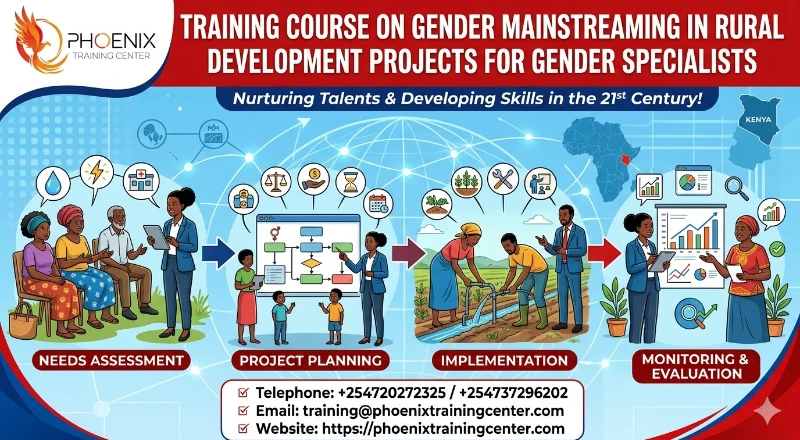
Course Overview
This comprehensive five-day training program is meticulously designed for Gender Specialists and development professionals seeking to master the principles and practical application of gender mainstreaming in rural development projects. The course provides an in-depth understanding of how to systematically integrate gender perspectives into all stages of project cycles, from design and implementation to monitoring and evaluation, to achieve more equitable and effective development outcomes in rural contexts. Participants will gain hands-on experience with tools and methodologies for gender analysis, gender-responsive planning, and measuring gender impact.
The curriculum covers a broad range of critical topics, including foundational concepts of gender and development, conducting gender analysis in rural settings, developing gender-responsive project designs, integrating gender into project implementation strategies, gender-sensitive monitoring and evaluation, addressing specific rural gender issues (e.g., land rights, access to resources, workload), budgeting for gender equality, advocacy for gender-transformative change, and building institutional capacity for gender mainstreaming. Each module is carefully structured to provide a blend of theoretical knowledge and intensive practical application through case studies, gender analysis exercises, and project design simulations, equipping Gender Specialists with the expertise to drive meaningful gender equality outcomes in rural development.
Course Objectives
Upon the successful completion of this Gender Mainstreaming in Rural Development Projects for Gender Specialists participants will be able to:
ü Understand core concepts of gender, gender equality, and gender mainstreaming.
ü Conduct comprehensive gender analysis in diverse rural development contexts.
ü Develop gender-responsive project designs and logical frameworks.
ü Integrate gender considerations effectively throughout project implementation.
ü Design and implement gender-sensitive monitoring and evaluation systems.
ü Address key gender issues and inequalities prevalent in rural settings.
ü Develop strategies for budgeting and resource allocation for gender equality.
ü Advocate for gender-transformative policies and practices in rural development.
ü Build institutional capacity for effective gender mainstreaming.
ü Measure and report on gender-specific outcomes and impacts of rural projects.
Training Methodology
The course is designed to be highly interactive, challenging and stimulating. It will be an instructor led training and will be delivered using a blended learning approach comprising of:
ü Interactive lectures and discussions on gender theory and mainstreaming strategies
ü Case studies of gender mainstreaming successes and challenges in rural projects
ü Hands-on gender analysis exercises using real-world scenarios
ü Practical sessions on developing gender-responsive indicators and budgets
ü Group workshops on project design and implementation strategies
ü Role-playing for facilitating gender-sensitive discussions
ü Q&A sessions and insights from experienced gender experts and practitioners
Our facilitators are seasoned industry professionals with years of expertise in their chosen fields. All facilitation and course materials will be offered in English.
Who Should Attend?
This Gender Mainstreaming in Rural Development Projects for Gender Specialists would be suitable for, but not limited to:
ü Gender Specialists
ü Gender Advisors
ü Social Development Experts
ü Project Managers in rural development
ü M&E Officers with a gender focus
ü NGO Program Managers
ü Government officials in rural development
ü Researchers in gender studies
Personal Benefits
ü Enhanced expertise in gender analysis and mainstreaming methodologies.
ü Mastery of practical tools for integrating gender into project cycles.
ü Improved ability to design and manage gender-responsive rural development projects.
ü Increased confidence in advocating for gender equality in professional settings.
ü Deeper understanding of complex gender dynamics in rural contexts.
ü Significant career advancement opportunities in gender and development.
Organizational Benefits
ü More effective and equitable rural development projects and programs.
ü Increased likelihood of achieving sustainable and inclusive development outcomes.
ü Enhanced reputation and compliance with gender equality standards.
ü Improved accountability for gender-related results.
ü Better understanding of target beneficiaries' needs and priorities.
ü Development of skilled gender specialists capable of driving organizational change.
ü Course Duration: 5 Days
ü Training Fee
o Physical Training: USD 1,400
o Online / Virtual Training: USD 1,000
Module 1: Foundational Concepts of Gender and Development
ü Defining gender, sex, gender roles, and gender equality
ü Understanding gender stereotypes and norms in rural settings
ü Gender inequality: causes, manifestations, and impacts on development
ü Introduction to gender mainstreaming: definition, principles, and rationale
ü The continuum from gender-blind to gender-transformative approaches
ü Practical session: Analyzing a rural development initiative for its 'gender-blind' or 'gender-aware' elements.
Module 2: Conducting Gender Analysis in Rural Contexts
ü Purpose and scope of gender analysis in rural development
ü Frameworks and tools for gender analysis (e.g., Harvard Analytical Framework, Moser Framework)
ü Data collection methods for gender analysis (disaggregated data, qualitative insights)
ü Analyzing gender roles, responsibilities, access to/control over resources, and decision-making power
ü Identifying gender-based constraints and opportunities in specific rural sectors
ü Practical session: Conducting a gender analysis of a hypothetical rural livelihood project, identifying key gender issues.
Module 3: Gender-Responsive Project Design and Planning
ü Integrating gender into needs assessment and problem identification
ü Developing gender-sensitive objectives and expected outcomes
ü Crafting gender-responsive indicators and targets
ü Designing activities that address gender inequalities and promote women's empowerment
ü Developing a gender strategy for a rural development project
ü Practical session: Revising a sample project logical framework to make it more gender-responsive.
Module 4: Integrating Gender into Project Implementation
ü Strategies for gender-sensitive community engagement and participation
ü Ensuring equitable access to project benefits and resources
ü Building capacity of project staff and partners on gender equality
ü Addressing potential gender-based risks and unintended negative consequences
ü Facilitating women's leadership and collective action in rural communities
ü Practical session: Developing a plan for how to ensure equitable participation of men and women in project activities.
Module 5: Gender-Sensitive Monitoring, Evaluation, and Learning
ü Designing gender-sensitive M&E frameworks and data collection tools
ü Collecting and analyzing gender-disaggregated data
ü Developing gender-specific indicators for outputs, outcomes, and impact
ü Facilitating gender-responsive review meetings and feedback mechanisms
ü Documenting and sharing lessons learned on gender mainstreaming
ü Practical session: Formulating gender-specific indicators for a rural education or health project.
Module 6: Addressing Specific Gender Issues in Rural Development Sectors
ü Gender and land rights/property ownership in rural areas
ü Women's access to productive resources (credit, technology, extension services)
ü Gendered division of labor and time burdens in rural households
ü Women's participation in agricultural value chains and economic empowerment
ü Gender-based violence (GBV) and its links to rural development
ü Practical session: Discussing strategies to address a specific gender inequality in a rural sector (e.g., women's limited access to agricultural training).
Module 7: Budgeting for Gender Equality and Resource Allocation
ü Understanding gender-responsive budgeting principles
ü Tracking resource allocation for gender equality initiatives
ü Identifying gender gaps in project budgets
ü Advocating for increased investment in women's empowerment
ü Costing gender mainstreaming activities effectively
ü Practical session: Reviewing a project budget and identifying opportunities for gender-responsive allocation.
Module 8: Advocacy for Gender-Transformative Change
ü Developing a gender advocacy strategy for rural development issues
ü Engaging with policymakers and decision-makers on gender equality
ü Building alliances and networks for gender advocacy
ü Communicating compelling messages on the importance of gender equality
ü Overcoming resistance to gender-transformative change
ü Practical session: Crafting key advocacy messages to promote women's leadership in rural governance.
Module 9: Institutionalizing Gender Mainstreaming
ü Developing organizational gender policies and strategies
ü Establishing gender focal points and gender teams
ü Integrating gender into human resource practices (recruitment, training)
ü Fostering a gender-equitable organizational culture
ü Building partnerships with gender equality organizations
ü Practical session: Identifying steps an organization can take to strengthen its internal capacity for gender mainstreaming.
Module 10: Measuring and Reporting on Gender Impact
ü Understanding different levels of gender impact (access, participation, control, transformation)
ü Methodologies for assessing gender-transformative change
ü Developing compelling gender impact stories and case studies
ü Reporting gender results to donors, governments, and communities
ü Using gender impact data for continuous program improvement
ü Practical session: Designing a simple framework for capturing and reporting on gender-transformative change in a rural project.
About Our Trainers
The training will be delivered by a team of highly experienced Gender Equality Specialists, Social Development Experts, and Rural Development Practitioners with extensive backgrounds in integrating gender perspectives into diverse development sectors. Our trainers bring a wealth of practical strategies, hands-on experience with gender analysis tools, and deep insights into navigating the complexities of gender dynamics in rural contexts. Their expertise ensures that participants gain cutting-edge knowledge and actionable skills to drive meaningful gender equality outcomes in rural development projects.
Quality Statement
We are committed to delivering high-quality, practical, and relevant training programs that empower professionals to excel in their roles and contribute significantly to the success of their organizations. Our courses are continually updated to reflect the latest industry trends, regulatory changes, and best practices.
Tailor-Made Courses
We offer tailor-made courses designed to meet the specific needs and objectives of your organization. Contact us to discuss how we can customize a training program for your team. For further inquiries, please contact us on Tel: +254720272325 / +254737296202 or Email training@phoenixtrainingcenter.com
ü Participants should be reasonably proficient in English.
ü Applicants must live up to Phoenix Center for Policy, Research and Training admission criteria.
Terms and Conditions
ü Discounts: Organizations sponsoring Four Participants will have the 5th attend Free
ü What is catered for by the Course Fees: Fees cater for all requirements for the training – Learning materials, Lunches, Teas, Snacks and Certification. All participants will additionally cater for their travel and accommodation expenses, visa application, insurance, and other personal expenses.
ü Certificate Awarded: Participants are awarded Certificates of Participation at the end of the training.
ü The program content shown here is for guidance purposes only. Our continuous course improvement process may lead to changes in topics and course structure.
ü Approval of Course: Our Programs are NITA Approved. Participating organizations can therefore claim reimbursement on fees paid in accordance with NITA Rules.
Booking for Training
Simply send an email to the Training Officer on training@phoenixtrainingcenter.com and we will send you a registration form. We advise you to book early to avoid missing a seat to this training. Or call us on +254720272325 / +254737296202
Payment Options
We provide 3 payment options, choose one for your convenience, and kindly make payments at least 5 days before the Training start date to reserve your seat:
ü Groups of 5 People and Above – Cheque Payments to: Phoenix Center for Policy, Research and Training Limited should be paid in advance, 5 days to the training.
ü Invoice: We can send a bill directly to you or your company.
ü Deposit directly into Bank Account (Account details provided upon request)
Cancellation Policy
ü Payment for all courses includes a registration fee, which is non-refundable, and equals 15% of the total sum of the course fee.
ü Participants may cancel attendance 14 days or more prior to the training commencement date.
ü No refunds will be made 14 days or less before the training commencement date. However, participants who are unable to attend may opt to attend a similar training course at a later date or send a substitute participant provided the participation criteria have been met.
Accommodation and Airport Transfer
For physical training attendees, we can assist with recommendations for accommodation near the training venue. Airport pick-up services can also be arranged upon request to ensure a smooth arrival. Please inform us of your travel details in advance if you require these services. For reservations contact the Training Officer on Email: training@phoenixtrainingcenter.com or on Tel: +254720272325 / +254737296202
| Course Dates | Venue | Fees | Enroll |
|---|

Phoenix Training Center
Typically replies in minutes