
Course Description
This essential training program is specifically designed for Corporate Trainers, offering an in-depth exploration of Adult Learning Principles and Andragogy. Participants will gain a robust understanding of how adults learn differently from children, enabling them to design and deliver highly effective and engaging training sessions that resonate with the unique needs and motivations of corporate learners. The course emphasizes both the foundational theories of adult education and the practical application of learner-centered methodologies.
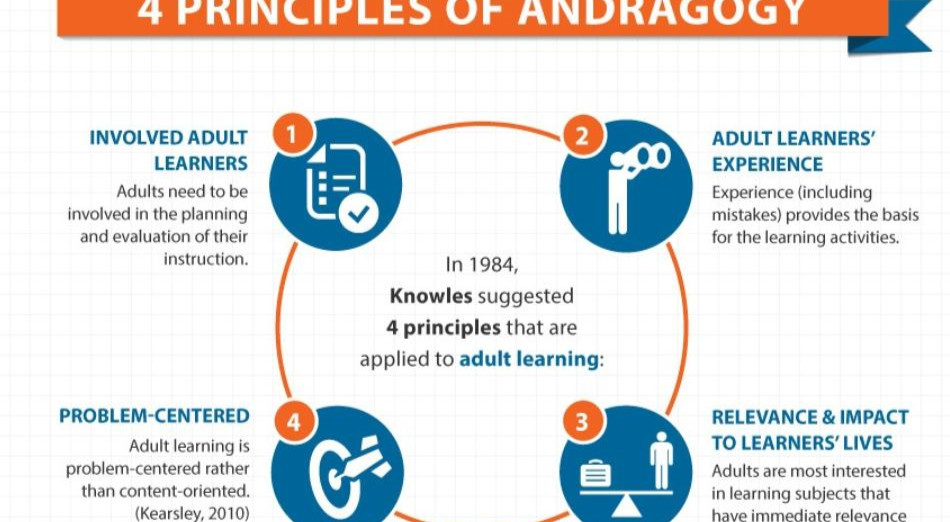
This training will cover key topics such as Malcolm Knowles' principles of andragogy, adult learning styles, fostering intrinsic motivation, creating a supportive learning environment, designing experiential learning activities, and leveraging adult learners' prior experiences. Participants will learn how to transition from a content delivery focus to a facilitation approach, empowering their corporate audiences to actively participate, apply new knowledge, and achieve measurable performance improvements.
Course Objectives
Upon the successful completion of this Training Course on Adult Learning Principles and Andragogy for Corporate Trainers, participants will be able to:
ü Explain and apply the core principles of adult learning (andragogy).
ü Design training programs and activities that align with how adults learn best.
ü Foster a highly engaging and participatory learning environment.
ü Leverage adult learners' prior knowledge and experience effectively.
ü Select and apply diverse instructional strategies suitable for adult audiences.
ü Enhance their facilitation skills to maximize learner engagement and application.
Training Methodology
The course is designed to be highly interactive, challenging and stimulating. It will be an instructor led training and will be delivered using a blended learning approach comprising of presentations, discussions, guided sessions of practical exercise, case study review, web-based tutorials, group work, exploration of relevant issues collaborative strength training, performance measurement, and workshops of participants’ displays, all of which adhere to the highest standards of training. The training technique is built on learning by doing, with lecturers using a learner-centered approach to engage participants and provide tasks that allow them to apply what they’ve learned. Experiential knowledge is also given equal importance within the format of training. Our facilitators are seasoned industry professionals with years of expertise in their chosen fields. All facilitation and course materials will be offered in English.
Who Should Attend?
This Training Course on Adult Learning Principles and Andragogy for Corporate Trainers would be suitable for, but not limited to:
ü Corporate Trainers
ü Learning & Development Specialists
ü Training Facilitators
ü Subject Matter Experts (SMEs) who deliver training
ü HR Professionals involved in training
ü Anyone responsible for delivering training to adults
Personal Benefits
ü Enhanced ability to create impactful and memorable training experiences.
ü Improved confidence in managing diverse adult learning groups.
ü Greater effectiveness in driving behavior change and skill application.
ü Professional growth and recognition as a highly skilled corporate trainer.
ü Deeper satisfaction from facilitating meaningful learning for colleagues.
Organizational Benefits
ü More effective and engaging training programs for employees.
ü Improved knowledge retention and skill transfer to the workplace.
ü Increased employee motivation and participation in learning initiatives.
ü Better return on investment (ROI) for training expenditures.
ü Cultivation of a continuous learning culture within the organization.
ü Course Duration: 5 Days
ü Training Fee
o Physical Training: USD 1,300
o Online / Virtual Training: USD 1,000
Course Outline
Module 1: Understanding the Adult Learner: Foundations of Andragogy
ü Distinguishing pedagogy from andragogy: key principles of adult learning
ü Malcolm Knowles' five assumptions of adult learners
ü The adult learning cycle and its implications for training design
ü Psychological factors influencing adult learning
ü The role of self-direction and autonomy in adult education
ü Practical Session: Reflecting on How Andragogy Differs from Past Learning Experiences
Module 2: Motivation, Engagement, and Readiness to Learn
ü Intrinsic vs. extrinsic motivation in adult learning
ü Creating a compelling "why" for learning
ü Addressing adult learners' readiness to learn and prior experience
ü Strategies for capturing and sustaining attention
ü Building a positive and safe learning environment
ü Practical Session: Identifying Motivational Triggers for a Specific Corporate Training Topic
Module 3: Designing Learner-Centered Training Programs
ü Shifting from content delivery to performance outcomes
ü Conducting a needs assessment with adult learners in mind
ü Writing clear, relevant, and performance-based learning objectives
ü Structuring training programs for adult retention and application
ü Designing activities that encourage active participation
ü Practical Session: Redesigning a Segment of a Training Program to Be More Learner-Centered
Module 4: Facilitation Skills for Adult Learning Environments
ü The trainer's role as a facilitator, not just an instructor
ü Active listening and effective questioning techniques
ü Managing group dynamics and fostering participation
ü Handling challenging questions and difficult participants
ü Building rapport and trust with adult learners
ü Practical Session: Practicing Facilitation Techniques Through Role-Play
Module 5: Leveraging Experience and Problem-Based Learning
ü The value of adult learners' prior experience
ü Strategies for eliciting and building upon existing knowledge
ü Designing problem-based learning (PBL) scenarios
ü Utilizing case studies, simulations, and real-world examples
ü Encouraging peer-to-peer learning and knowledge sharing
ü Practical Session: Designing a Problem-Based Learning Scenario for a Training Module
Module 6: Feedback, Reflection, and Application in Adult Learning
ü Providing constructive and actionable feedback to adults
ü Encouraging self-assessment and reflective practice
ü Strategies for promoting transfer of learning to the workplace
ü Designing follow-up activities and reinforcement
ü Measuring application and impact on job performance
ü Practical Session: Practicing Giving and Receiving Constructive Feedback
Module 7: Diverse Learning Styles and Inclusive Training
ü Overview of various adult learning styles (e.g., VARK, Kolb's Learning Styles)
ü Adapting training content and delivery for diverse preferences
ü Strategies for inclusive training for different cultural backgrounds
ü Addressing accessibility needs in training materials and delivery
ü Creating a welcoming and respectful learning environment for all
ü Practical Session: Adapting a Training Activity to Cater to Different Learning Styles
Module 8: Overcoming Challenges in Adult Training
ü Addressing resistance to change and new learning
ü Managing time constraints and competing priorities for adult learners
ü Dealing with mixed skill levels and experience within a group
ü Strategies for handling technology issues and technical difficulties
ü Maintaining energy and engagement in longer sessions
ü Practical Session: Developing Strategies for Handling a Common Training Challenge
Module 9: Technology and Adult Learning
ü Leveraging technology to enhance adult learning experiences
ü Virtual Instructor-Led Training (VILT) best practices
ü Utilizing e-learning platforms and blended learning approaches
ü Tools for collaboration, interaction, and assessment in a digital environment
ü Digital literacy for trainers and learners
ü Practical Session: Exploring and Utilizing an Online Collaboration Tool for Training
Module 10: The Trainer as a Lifelong Learner and Coach
ü Continuous professional development for corporate trainers
ü Seeking feedback and self-reflection on training performance
ü Transitioning from trainer to performance consultant and coach
ü Building a personal learning network
ü Staying updated on new trends in adult education and training
ü Practical Session: Developing a Personal Professional Development Plan as a Corporate Trainer
Admission Criteria
ü Participants should be reasonably proficient in English.
ü Applicants must live up to Phoenix Center for Policy, Research and Training admission criteria.
Terms and Conditions
Booking for Training
Simply send an email to the Training Officer on training@phoenixtrainingcenter.com and we will send you a registration form. We advise you to book early to avoid missing a seat to this training.
Or call us on +254720272325 / +254737296202
Payment Options
We provide 3 payment options, choose one for your convenience, and kindly make payments at least 5 days before the Training start date to reserve your seat:
Cancellation Policy
Tailor Made Courses
This training course can also be customized for your institution upon request for a minimum of 5 participants. You can have it conducted at our Training Centre or at a convenient location.
For further inquiries, please contact us on Tel: +254720272325 / +254737296202 or Email training@phoenixtrainingcenter.com
Accommodation and Airport Transfer
Accommodation and Airport Transfer is arranged upon request and at extra cost. For reservations contact the Training Officer on Email: training@phoenixtrainingcenter.com or on Tel: +254720272325 / +254737296202
| Course Dates | Venue | Fees | Enroll |
|---|

Phoenix Training Center
Typically replies in minutes