
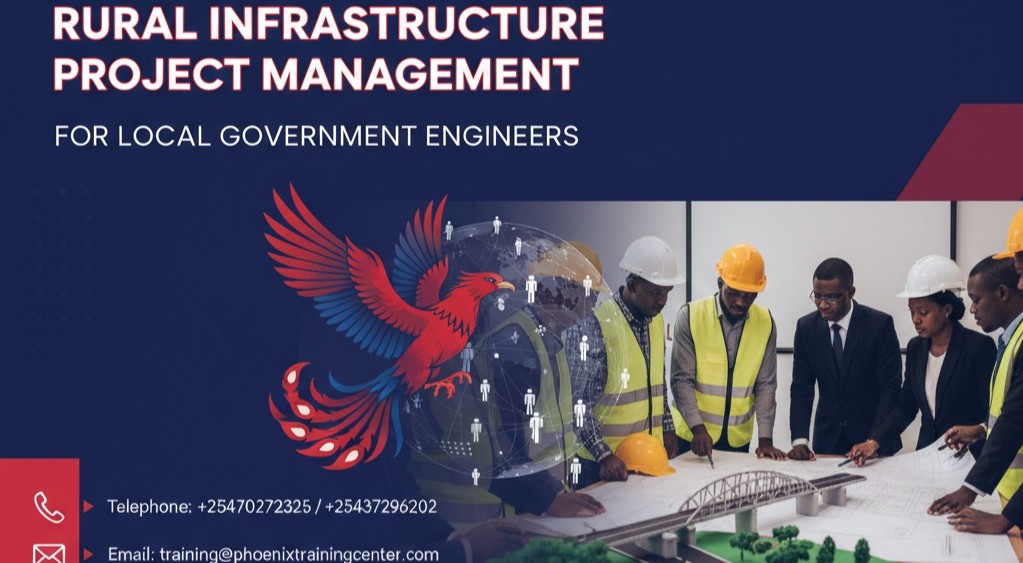
Masterclass in Strategic Rural Infrastructure Project Management for Local Government Engineers
Course Overview
Rural infrastructure development is the backbone of regional economic transformation, requiring a unique blend of engineering precision and adaptive project management. This intensive training course is specifically designed for Local Government Engineers to bridge the gap between technical design and the complex administrative, financial, and environmental realities of rural project delivery. Participants will master the art of managing life-cycle infrastructure projects—from rural access roads and water systems to renewable energy grids—ensuring they are resilient, cost-effective, and community-centered.
Over 10 comprehensive days, the course explores the transition from traditional engineering to strategic management. Topics include advanced procurement for public works, sustainable materials for rural settings, climate-resilient engineering standards, and the integration of digital tools like GIS and BIM in low-resource environments. The training emphasizes "value for money" and ethical oversight, equipping engineers to navigate the pressures of public office while delivering high-quality assets that stand the test of time and climate change.
Upon the successful completion of this Masterclass in Strategic Rural Infrastructure Project Management for Local Government Engineers participants will be able to:
ü Manage the full lifecycle of rural infrastructure projects using international PM standards.
ü Conduct rigorous technical and financial feasibility studies tailored for rural contexts.
ü Implement climate-resilient engineering designs for sustainable rural development.
ü Oversee complex procurement processes and contract management under NITA and donor guidelines.
ü Utilize GIS and digital project management tools for real-time site monitoring.
ü Facilitate community-led maintenance models to ensure asset longevity.
Training Methodology
The course is designed to be highly interactive, challenging and stimulating. It will be an instructor led training and will be delivered using a blended learning approach comprising of:
ü Interactive technical lectures and expert-led thematic discussions
ü Hands-on software simulations (GIS, MS Project, and AutoCAD applications)
ü Real-world case study deconstruction of rural infrastructure failures and successes
ü Field visits to ongoing rural engineering sites for practical assessment
ü Collaborative "Project Blueprint" workshops for immediate regional application
Our facilitators are seasoned industry professionals with years of expertise in their chosen fields. All facilitation and course materials will be offered in English.
Who Should Attend?
This Masterclass in Strategic Rural Infrastructure Project Management for Local Government Engineers would be suitable for, but not limited to:
ü Local Government Civil and Structural Engineers
ü Public Works Directors and Superintendents
ü Rural Road Authority Engineers
ü Water and Sanitation Engineers in Regional Offices
ü Infrastructure Planning Officers
ü Technical Consultants for Rural Development
ü Senior Technicians and Project Inspectors
Personal Benefits
ü Elevate your professional standing by mastering advanced project management frameworks.
ü Develop specialized skills in "Climate-Smart" engineering, a high-demand niche in development.
ü Enhance your leadership capability in managing multi-disciplinary field teams.
ü Build a robust network of peer engineers from diverse regional administrations.
Organizational Benefits
ü Significant reduction in project delays and cost overruns through streamlined management.
ü Enhanced durability of public assets via better material selection and oversight.
ü Improved transparency and compliance in public procurement and technical audits.
ü Standardized infrastructure reporting and monitoring across the district or region.
ü Course Duration: 10 Days
ü Training Fee
o Physical Training: USD 3,000
o Online / Virtual Training: USD 2,500
Module 1: Engineering Project Management Frameworks
ü The PMBOK and PRINCE2 frameworks applied to civil works
ü Defining the engineering project lifecycle in local government
ü Stakeholder identification and expectations management
ü Project Charter development for district infrastructure
ü Practical Session: Constructing a Work Breakdown Structure (WBS) for a rural bridge project.
Module 2: Pre-Feasibility and Technical Design Standards
ü Geotechnical and topographical survey requirements
ü Hydrological modeling for rural drainage systems
ü Material testing and local resource identification
ü Cost-benefit analysis for infrastructure alternatives
ü Practical Session: Conducting a site selection matrix exercise for a rural health clinic.
Module 3: Rural Access Roads: Planning and Sustainable Paving
ü Low-volume sealed road (LVSR) technologies
ü Sustainable drainage and culvert design
ü Labor-based vs. Equipment-based construction methods
ü Pavement management systems for rural networks
ü Practical Session: Designing a maintenance schedule for a 10km gravel road stretch.
Module 4: Water and Sanitation (WASH) Infrastructure Management
ü Design of gravity-fed water schemes and solar pumping
ü Small-town sewerage and fecal sludge management
ü Water quality monitoring and treatment infrastructure
ü Planning for long-term aquifer sustainability
ü Practical Session: Sizing a solar-powered water pump system for a village of 500 households.
Module 5: Renewable Energy and Rural Electrification Grids
ü Off-grid and mini-grid system design
ü Integrating renewable energy into district public facilities
ü Technical standards for rural power distribution
ü Battery storage and power management systems
ü Practical Session: Drafting a technical specification for a community solar mini-grid.
Module 6: Procurement of Public Works and Consultancy Services
ü The Public Procurement and Asset Disposal Act (PPADA)
ü Drafting clear Bills of Quantities (BoQs) and Terms of Reference (ToRs)
ü Tendering procedures: E-procurement and transparency
ü Evaluation of technical and financial bids
ü Practical Session: Simulation of a tender evaluation committee meeting for a market project.
Module 7: Contract Management and FIDIC Standards
ü Introduction to FIDIC Red and Yellow books
ü Managing variations, claims, and disputes
ü Performance bonds and advance payment guarantees
ü The role of the "Engineer" vs. the "Contractor"
ü Practical Session: Draft a response to a contractor's claim for an extension of time.
Module 8: GIS and Spatial Planning for Rural Engineers
ü Basics of QGIS for infrastructure mapping
ü Layering social data with engineering assets
ü Using GPS for field data collection and verification
ü Remote sensing for flood risk and erosion monitoring
ü Practical Session: Creating a district infrastructure map using open-source GIS software.
Module 9: Climate-Resilient Infrastructure and Disaster Proofing
ü Climate risk assessment for public assets
ü Bio-engineering for slope stabilization and erosion control
ü Designing for extreme weather events (floods, droughts)
ü Adaptive engineering standards for 2050 climate scenarios
ü Practical Session: Developing a "Resilience Checklist" for a rural coastal road.
Module 10: Structural Health Monitoring and Asset Management
ü Non-destructive testing (NDT) for older structures
ü Developing a District Asset Register
ü Predictive vs. Reactive maintenance strategies
ü Life-cycle costing (LCC) for public buildings
ü Practical Session: Performing a visual structural audit of a local government facility.
Module 11: Social and Environmental Impact Assessment (SEIA)
ü Screening for environmental risks in rural works
ü Social safeguards: Land acquisition and resettlement
ü Public participation in the engineering process
ü Waste management and environmental restoration plans
ü Practical Session: Drafting an Environmental Management Plan (EMP) for a dam project.
Module 12: Financial Management and Cost Engineering for Public Works
ü Cash flow forecasting for multi-year projects
ü Tracking project expenditure against budget
ü Managing currency fluctuations and inflation in materials
ü Interim payment certificate (IPC) preparation and verification
ü Practical Session: Preparing a monthly financial progress report for a construction project.
Module 13: Quality Assurance and Technical Audit Protocols
ü Setting up an on-site testing laboratory
ü Compaction, concrete strength, and bitumen testing
ü Third-party technical audits and compliance
ü Managing non-conformance reports (NCR)
ü Practical Session: Simulation of a surprise technical audit on a road construction site.
Module 14: Occupational Health and Safety (OHS) on Rural Sites
ü OHS laws and site safety regulations
ü Hazard identification and risk assessment (HIRA)
ü Managing sub-contractor safety compliance
ü Incident reporting and emergency response planning
ü Practical Session: Conducting a Tool-Box Talk and site safety inspection.
Module 15: Community-Based Operation and Maintenance (CBOM)
ü Formation and training of Water/Road committees
ü Setting user fees and maintenance fund management
ü Handover protocols: From Engineer to Community
ü Participatory monitoring of asset use
ü Practical Session: Designing a community-led maintenance manual for a borehole.
Module 16: Digital Transformation: BIM and IoT in Rural Projects
ü Introduction to Building Information Modeling (BIM)
ü Using IoT sensors for bridge and dam monitoring
ü Digital twins for district infrastructure planning
ü Mobile apps for site supervision and data sync
ü Practical Session: Demo of a mobile-based site reporting and photo-tagging app.
Module 17: Ethics, Accountability, and Anti-Corruption in Engineering
ü Professional codes of conduct for Engineers
ü Identifying "Red Flags" in public works corruption
ü Whistleblowing mechanisms and ethical dilemmas
ü The social responsibility of the local government engineer
ü Practical Session: Workshop on resolving ethical dilemmas in project site management.
Module 18: Strategic Leadership and Communication for Senior Engineers
ü Communicating technical data to non-technical politicians
ü Negotiation skills with contractors and donors
ü Managing diverse engineering and technical teams
ü Strategic planning for future-ready regional infrastructure
ü Practical Session: Delivering a project briefing to a County/District Development Committee.
About Our Trainers
Our training facilitators are Registered Professional Engineers and Certified Project Managers with over 25 years of combined experience in the public and private sectors. They have spearheaded major rural infrastructure projects for the World Bank, African Development Bank, and various national governments. Our trainers bring a wealth of practical experience in managing complex logistics, procurement, and technical design in the most remote and challenging environments.
Quality Statement
At Phoenix Center for Policy, Research and Training, we prioritize technical excellence and practical relevance. Our curriculum is aligned with international best practices and NITA standards, ensuring that our training is not just theoretical but provides "day-one" utility. We utilize the latest engineering software and management tools to provide a cutting-edge learning experience for the modern public sector engineer.
Tailor-Made Courses
We understand that every organization has unique challenges and opportunities as well as unique training needs. Phoenix Training Center offers tailor-made courses designed to address specific requirements and challenges faced by your team or organization. Whether you need a customized curriculum, a specific duration, or on-site delivery, we can adapt our expertise to provide a training solution that perfectly aligns with your objectives. We can customize this Course to focus on your industry, specific risk profile, or internal stakeholder dynamics. Contact us to discuss how we can create a bespoke training program that maximizes value and impact for your team. For further inquiries, please contact us on Tel: +254720272325 / +254737296202 or Email training@phoenixtrainingcenter.com
ü Participants should be reasonably proficient in English.
ü Applicants must live up to Phoenix Center for Policy, Research and Training admission criteria.
Terms and Conditions
ü Discounts: Organizations sponsoring Four Participants will have the 5th attend Free
ü What is catered for by the Course Fees: Fees cater for all requirements for the training – Learning materials, Lunches, Teas, Snacks and Certification. All participants will additionally cater for their travel and accommodation expenses, visa application, insurance, and other personal expenses.
ü Certificate Awarded: Participants are awarded Certificates of Participation at the end of the training.
ü The program content shown here is for guidance purposes only. Our continuous course improvement process may lead to changes in topics and course structure.
ü Approval of Course: Our Programs are NITA Approved. Participating organizations can therefore claim reimbursement on fees paid in accordance with NITA Rules.
Booking for Training
Simply send an email to the Training Officer on training@phoenixtrainingcenter.com and we will send you a registration form. We advise you to book early to avoid missing a seat to this training. Or call us on +254720272325 / +254737296202
Payment Options
We provide 3 payment options, choose one for your convenience, and kindly make payments at least 5 days before the Training start date to reserve your seat:
ü Groups of 5 People and Above – Cheque Payments to: Phoenix Center for Policy, Research and Training Limited should be paid in advance, 5 days to the training.
ü Invoice: We can send a bill directly to you or your company.
ü Deposit directly into Bank Account (Account details provided upon request)
Cancellation Policy
ü Payment for all courses includes a registration fee, which is non-refundable, and equals 15% of the total sum of the course fee.
ü Participants may cancel attendance 14 days or more prior to the training commencement date.
ü No refunds will be made 14 days or less before the training commencement date. However, participants who are unable to attend may opt to attend a similar training course at a later date or send a substitute participant provided the participation criteria have been met.
Accommodation and Airport Transfer
For physical training attendees, we can assist with recommendations for accommodation near the training venue. Airport pick-up services can also be arranged upon request to ensure a smooth arrival. Please inform us of your travel details in advance if you require these services. For reservations contact the Training Officer on Email: training@phoenixtrainingcenter.com or on Tel: +254720272325 / +254737296202
| Course Dates | Venue | Fees | Enroll |
|---|

Phoenix Training Center
Typically replies in minutes