
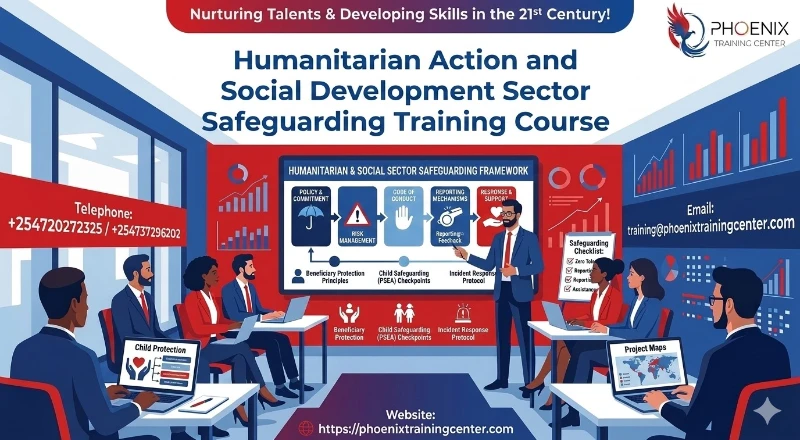
Course Overview
This comprehensive training program is specifically designed for professionals operating within NGOs, the social development sector, and humanitarian action frameworks. The course focuses heavily on safeguarding training, establishing robust protocols to ensure compliance, safety, and ethical standardizations across diverse operational landscapes. Participants will gain vital skills in dealing with minors and dealing with people with disabilities, safeguarding training core competencies, and inclusive programmatic design to protect vulnerable populations effectively during crisis and development phases.
The curriculum covers a progressive breakdown of inclusive community engagement, rights-based legal frameworks, and structural safety mechanisms. Participants will explore core concepts of international humanitarian action, protection mainstreaming, and practical operational toolkits. Additionally, the training offers intensive modules dedicated to risk management, reporting structures, and survivor-centered accountability frameworks designed to empower social development organizations to maintain absolute integrity in their fields of operation.
Upon the successful completion of this Humanitarian Action and Social Development Sector Safeguarding Training Course, participants will be able to:
ü Master the fundamental principles of protection and safeguarding training within the social development sector and humanitarian action
ü Develop comprehensive risk assessment frameworks for dealing with minors and protecting vulnerable adults
ü Implement inclusive operational strategies geared towards dealing with people with disabilities across diverse project lifecycles
ü Establish safe, transparent, and accessible reporting and feedback mechanisms within NGOs
ü Design actionable safeguarding policies that comply with international humanitarian standards and local regulatory frameworks
Training Methodology
The course is designed to be highly interactive, challenging and stimulating. It will be an instructor led training and will be delivered using a blended learning approach comprising of:
ü Interactive lectures and Expert-Led thematic presentations
ü Facilitated group discussions and collaborative peer-to-peer learning
ü Case study analyses based on real-world humanitarian scenarios
ü Role-playing exercises and simulated field crisis responses
ü Hands-on policy development workshops and risk-mapping practicals
Our facilitators are seasoned industry professionals with years of expertise in their chosen fields. All facilitation and course materials will be offered in English.
Who Should Attend?
This Humanitarian Action and Social Development Sector Safeguarding Training Course would be suitable for, but not limited to:
ü NGO Directors and Program Managers
ü Child Protection Officers and Safeguarding Leads
ü Humanitarian Field Coordinators and Aid Workers
ü Social Workers and Development Practitioners
ü Human Resource Officers in the non-profit sector
ü Compliance, Risk, and Legal Officers within civil society organizations
Personal Benefits
ü Acquire advanced global certifications and specialized skills in safeguarding and protection
ü Enhance professional confidence in dealing with minors and managing sensitive disclosures
ü Gain practical capability to audit, design, and implement protection policies in any humanitarian context
ü Develop a deep, empathetic understanding of intersectional vulnerabilities, specifically relating to dealing with people with disabilities
Organizational Benefits
ü Mitigate institutional risks related to abuse, exploitation, and safeguarding failures
ü Elevate the organization's reputation and credibility among international donors and partners
ü Foster a safe, inclusive, and accountable institutional culture across all field offices
ü Ensure strict compliance with global humanitarian action standards and national NITA regulations
ü Course Duration: 5 Days
ü Training Fee:
o Physical Training: USD 1,500
o Online / Virtual Training: USD 1,000
Module 1: Fundamentals of Safeguarding Training in Humanitarian Action
ü Definitions, core principles, and the evolution of safeguarding in aid sectors
ü International standards: The Core Humanitarian Standard (CHS) and PSEA frameworks
ü Identifying types of harm, abuse, neglect, and exploitation in field operations
ü Duty of care, ethical boundaries, and code of conduct expectations for aid workers
ü Practical Session: Case analysis workshop mapping systemic safeguarding failures and identifying corrective field actions
Module 2: Strategic Frameworks for the Social Development Sector
ü Understanding the social development sector ecosystem and vulnerability landscapes
ü Legal and policy instruments governing human rights and community protection
ü Integrating protection principles into project design, monitoring, and evaluation
ü Multi-sectoral collaboration and local government engagement in safeguarding
ü Practical Session: Structural mapping of stakeholder responsibilities using local development project templates
Module 3: Best Practices for Dealing with Minors in Vulnerable Contexts
ü Child rights instruments: The UN Convention on the Rights of the Child (UNCRC)
ü Recognizing signs of physical, emotional, and sexual abuse in minors
ü Child-safe programming, safe recruitment, and digital child safety protocols
ü Mandatory reporting paths and ethical considerations in child protection documentation
ü Practical Session: Simulated role-play on managing sensitive disclosures from minors securely and ethically
Module 4: Rights-Based Approaches to Dealing with People with Disabilities
ü The UN Convention on the Rights of Persons with Disabilities (CRPD) and the social model
ü Identifying and dismantling institutional, environmental, and attitudinal barriers
ü Intersectional vulnerabilities: Safeguarding women, children, and elderly persons with disabilities
ü Inclusive communication techniques and accessible complaints procedures
ü Practical Session: Accessibility and vulnerability audit of a mock humanitarian distribution center layout
Module 5: Risk Assessment and Mitigation in Community-Led Interventions
ü Principles of risk management within community-based social development
ü Conducting participatory risk mapping with vulnerable community sub-groups
ü Designing mitigation frameworks for high-risk humanitarian environments
ü Balancing community engagement with strict protection safety boundaries
ü Practical Session: Developing an operational risk register for an emergency food and cash distribution campaign
Module 6: Establishing Accountability and Safe Reporting Mechanisms
ü Designing accessible, confidential, and safe Community-Based Complaint Mechanisms (CBCM)
ü Whistleblowing policies and protecting internal and external reporters from retaliation
ü Technology and tools for secure data management and incident logging
ü Building community trust and raising awareness about reporting channels
ü Practical Session: Designing a visual, low-literacy community feedback tool for field implementation
Module 7: Survivor-Centered Incident Management and Response
ü Core tenets of the survivor-centered approach: Safety, confidentiality, respect, and non-discrimination
ü Immediate response protocols following a safeguarding incident report
ü Psychological First Aid (PFA) and establishing safe, verified referral pathways
ü Investigation principles, evidentiary considerations, and maintaining institutional integrity
ü Practical Session: Mapping local referral pathways and conducting a mock multi-agency coordination response
Module 8: Protection Mainstreaming in Emergency and Disaster Relief
ü The four pillars of protection mainstreaming: Safety, access, accountability, and participation
ü Adapting rapid safeguarding assessments to fluid emergency environments
ü Preventing aid diversion, extortion, and sexual exploitation during crises
ü Ensuring inclusive coordination within the humanitarian cluster system
ü Practical Session: Rapid protection assessment simulation based on a sudden-onset displacement scenario
Module 9: Culture, Power Dynamics, and Institutional Safeguarding Compliance
ü Analyzing power imbalances between aid providers and beneficiary communities
ü Deconstructing organizational culture and addressing toxic workplace behaviors
ü The role of leadership in driving institutional safeguarding compliance and accountability
ü Conducting regular safeguarding health checks and internal protection audits
ü Practical Session: Self-assessment workshop evaluating organizational culture against a global safeguarding standard
Module 10: Action Planning and Policy Implementation for NGOs
ü Synthesizing course insights into localized organizational protection frameworks
ü Designing effective safeguarding training roll-out strategies for field teams
ü Budgeting for safeguarding: Resource allocation for protection activities
ü Sustaining momentum, indicators for success, and continuous learning systems
ü Practical Session: Drafting an institutional 12-month Safeguarding Action Plan customized to each participant's organization
About Our Trainers
Our training programs are developed and delivered by an elite panel of senior international development practitioners, certified safeguarding auditors, and humanitarian experts. Each trainer brings over fifteen years of active field experience directing child protection, inclusive development, and emergency response initiatives globally. Backed by solid academic credentials and extensive consultancies with United Nations agencies and global NGOs, our instructors offer participants deeply practical insights combined with cutting-edge industry methodologies.
Quality Statement
Phoenix Training Center is committed to providing world-class learning experiences that translate directly into impactful field results. We adhere to rigorous quality control frameworks, continuously updating our curricula to match evolving international standards and donor compliance mandates. Our interactive approaches are designed to engage adult learners comprehensively, combining theoretical mastery with practical, field-ready competencies that ensure immediate organizational return on investment.
Tailor-Made Courses
We understand that every organization has unique challenges and opportunities as well as unique training needs. Phoenix Training Center offers tailor-made courses designed to address specific requirements and challenges faced by your team or organization. Whether you need a customized curriculum, a specific duration, or on-site delivery, we can adapt our expertise to provide a training solution that perfectly aligns with your objectives. We can customize this Course to focus on your industry, specific risk profile, or internal stakeholder dynamics. Contact us to discuss how we can create a bespoke training program that maximizes value and impact for your team. For further inquiries, please contact us on Tel: +254720272325 / +254737296202 or Email: training@phoenixtrainingcenter.com.
Admission Criteria
ü Participants should be reasonably proficient in English.
ü Applicants must live up to Phoenix Center for Policy, Research and Training admission criteria.
Terms and Conditions
ü Discounts: Organizations sponsoring Four Participants will have the 5th attend Free.
ü What is catered for by the Course Fees: Fees cater for all requirements for the training – Learning materials, Lunches, Teas, Snacks and Certification. All participants will additionally cater for their travel and accommodation expenses, visa application, insurance, and other personal expenses.
ü Certificate Awarded: Participants are awarded Certificates of Participation at the end of the training.
ü Course Improvement: The program content shown here is for guidance purposes only. Our continuous course improvement process may lead to ch4anges in topics and course structure.
ü Approval of Course: Our Programs are NITA Approved. Participating organizations can therefore claim reimbursement on fees paid in accordance with NITA Rules.
Booking for Training
Kindly send an email to the Training Officer on training@phoenixtrainingcenter.com and we will send you a registration form. We advise you to book early to avoid missing a seat to this training. Or call us on +254720272325 / +254737296202
Payment Options
We provide 3 payment options, choose one for your convenience, and kindly make payments at least 5 days before the Training start date to reserve your seat:
ü Groups of 5 People and Above: Cheque Payments to: Phoenix Center for Policy, Research and Training Limited should be paid in advance, 5 days to the training.
ü Invoice: We can send a bill directly to you or your company.
ü Deposit: Directly into Bank Account (Account details provided upon request).
Cancellation Policy
ü Payment for all courses includes a registration fee, which is non-refundable and equals 15% of the total sum of the course fee.
ü Participants may cancel attendance 14 days or more prior to the training commencement date.
ü No refunds will be made 14 days or less before the training commencement date. However, participants who are unable to attend may opt to attend a similar training course at a later date or send a substitute participant.
Accommodation and Airport Transfer
For physical training attendees, we can assist with recommendations for accommodation near the training venue. Airport pick-up services can also be arranged upon request to ensure a smooth arrival. Please inform us of your travel details in advance if you require these services. For reservations contact the Training Officer on Email: training@phoenixtrainingcenter.com or on Tel: +254720272325 / +254737296202
| Course Dates | Venue | Fees | Enroll |
|---|

Phoenix Training Center
Typically replies in minutes