
Course Overview
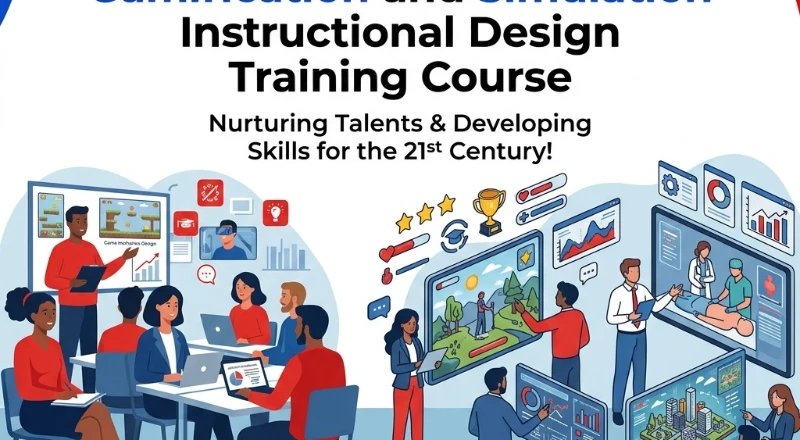
Modern adult learning demands innovative instructional approaches that shift passive knowledge delivery into immersive, engaging experiences. This course explores the mechanics of gamification, game-based learning, and interactive simulation design within corporate and academic training environments. Participants will master how to leverage game mechanics—such as points, badges, leaderboards, branching narratives, and scenario-based simulations—to significantly increase learner retention, engagement, and behavioral outcomes.
The curriculum guides educational and corporate professionals through the entire instructional design lifecycle for gamified environments. Participants begin by exploring behavioral learning theories and game psychology, then progress into designing core mechanics, crafting realistic scenario-based simulations, and integrating digital tools and Learning Management System (LMS) platforms. Final modules address data analytics, learner feedback loops, ROI measurement, and ethical game design to ensure sustainable learning impact.
Upon the successful completion of this Gamification and Simulation Instructional Design Training Course, participants will be able to:
ü Apply motivational psychology and game design frameworks to professional learning programs.
ü Design structural and content gamification strategies tailored to corporate and educational objectives.
ü Develop branching scenarios and immersive simulation models for complex skill acquisition.
ü Integrate gamification tools and simulation software into modern Learning Management Systems.
ü Measure the learning impact, engagement metrics, and Return on Investment (ROI) of gamified initiatives.
ü Address ethics, inclusivity, and accessibility in game-based learning environments.
Training Methodology
The course is designed to be highly interactive, challenging and stimulating. It will be an instructor led training and will be delivered using a blended learning approach comprising of:
ü Interactive lectures led by senior instructional designers and edtech specialists
ü Hands-on gamification workshops and rapid prototyping sessions
ü Case study analysis of high-impact corporate and academic simulation models
ü Practical game design and scenario-building lab exercises
ü Peer review, collaborative design sprints, and expert feedback sessions
Our facilitators are seasoned industry professionals with years of expertise in their chosen fields. All facilitation and course materials will be offered in English.
Who Should Attend?
This Gamification and Simulation Instructional Design Training Course would be suitable for, but not limited to:
ü Instructional Designers and E-Learning Developers
ü Corporate Trainers and Learning and Development (L&D) Managers
ü Higher Education Faculty and Academic Curriculum Developers
ü Human Resources and Talent Development Specialists
ü Training Consultants and Educational Technology Professionals
ü Software and Product Trainers
Benefits of the Training
Personal Benefits
ü Master cutting-edge instructional design techniques combining game mechanics and simulation modeling.
ü Build a portfolio of gamified learning modules and interactive simulation blueprints.
ü Elevate professional standing as an innovative learning technologist and curriculum architect.
Organizational Benefits
ü Increase employee course completion rates, knowledge retention, and workplace performance.
ü Modernize corporate training frameworks using scalable, cost-effective digital simulations.
ü Demonstrate measurable training outcomes and clear ROI for learning and development investments.
ü Course Duration: 5 Days
ü Training Fee:
o Physical Training: USD 1,500
o Online / Virtual Training: USD 1,000
Module 1: Foundations of Gamification and Behavioral Psychology in Learning
ü Introduction to gamification, game-based learning, and educational simulations
ü Self-Determination Theory (SDT): Autonomy, competence, and relatedness
ü Intrinsic vs. extrinsic motivation in adult learning environments
ü Bartle’s player types and Marczewski’s User Types Hexad
ü Practical Session: Mapping learner personas to specific motivational triggers and game mechanics
Module 2: Mechanics, Dynamics, and Aesthetics (MDA) Framework in Design
ü Understanding the Mechanics, Dynamics, and Aesthetics (MDA) model
ü Core game mechanics: Points, badges, leaderboards (PBLs), levels, and challenges
ü Game dynamics: Competition, collaboration, achievement, and discovery
ü Aesthetics: Emotional engagement, narrative immersion, and feedback loops
ü Practical Session: Deconstructing an existing training module using the MDA framework
Module 3: Structural vs. Content Gamification Strategies
ü Structural gamification: Enhancing learning delivery without altering content
ü Content gamification: Embedding story, mystery, and challenge into subject matter
ü Progress tracking, unlockable content, and mastery paths
ü Balancing reward systems to prevent extrinsic motivation burnout
ü Practical Session: Designing a structural gamification layer for a 5-day corporate onboarding course
Module 4: Scenario-Based Simulation Design and Branching Narratives
ü Principles of simulation-based learning and experiential training
ü Storyboarding branching logic and decision-tree architectures
ü Creating realistic consequence-driven learning scenarios
ü Managing cognitive load during high-fidelity simulations
ü Practical Session: Authoring a multi-branching scenario script for compliance or soft-skills training
Module 5: Tools, Software, and LMS Integration for Gamified Learning
ü Overview of rapid e-learning authoring tools (Articulate Storyline, Adobe Captivate, Genially)
ü Specialized simulation and VR/AR training platforms
ü xAPI (Experience API) and SCORM tracking standards for game events
ü Integrating badges and leaderboards into Moodle, Canvas, and Enterprise LMSs
ü Practical Session: Building an interactive gamified micro-learning asset in an authoring tool
Module 6: Game-Based Learning (GBL) vs. Gamification Implementation
ü Distinguishing GBL (using full games) from gamification (applying game elements)
ü Serious games: Design principles for heavy industry, healthcare, and finance
ü Escape rooms and challenge-based learning for team collaboration
ü Cost-benefit analysis of custom game development vs. off-the-shelf solutions
ü Practical Session: Developing an educational digital escape room challenge for team problem-solving
Module 7: User Experience (UX) and Interface Design for Educational Games
ü User interface (UI) principles for intuitive game navigation
ü Visual design, audio feedback, and micro-interactions in learning games
ü Reducing interface friction to keep learners in the "Flow" state
ü Usability testing and iterative prototyping for learning games
ü Practical Session: Paper prototyping and wireframing a gamified mobile learning application interface
Module 8: Data Analytics, Tracking, and Measuring Gamification ROI
ü Identifying Key Performance Indicators (KPIs) for gamified learning
ü Analyzing learner interaction data, time-on-task, and completion rates
ü Evaluating skill transfer and on-the-job behavioral changes
ü Calculating Return on Investment (ROI) for simulation development
ü Practical Session: Building a dashboard framework to track learner progress and engagement metrics
Module 9: Inclusivity, Accessibility, and Ethics in Game-Based Design
ü Universal Design for Learning (UDL) in gamified environments
ü Ensuring WCAG compliance, screen-reader compatibility, and color contrast
ü Avoiding toxic competition and leaderboard demotivation
ü Ethical handling of learner data, privacy, and behavioral nudging
ü Practical Session: Auditing a gamified course module for accessibility barriers and ethical concerns
Module 10: Capstone Project: End-to-End Gamified Simulation Blueprint
ü Synthesizing learning mechanics, simulation logic, and assessment tools
ü Peer presentation of complete gamified learning blueprints
ü Evaluating projects against industry benchmarks and user engagement criteria
ü Developing a roll-out and change management plan for organizational implementation
ü Practical Session: Delivering a pitch and prototype walkthrough of a custom gamified simulation project
About Our Trainers
Our training programs are delivered by a team of distinguished instructional designers, gamification architects, and educational technology specialists. Each trainer brings over 15 years of practical experience in designing digital learning solutions, serious games, and enterprise simulation models for leading corporate institutions and higher education facilities. They blend deep academic knowledge of behavioral psychology with practical e-learning development expertise to deliver an engaging, high-impact learning experience.
Quality Statement
Phoenix Training Center is dedicated to delivering high-quality, outcome-oriented professional development programs. Our course materials are continuously updated to align with global instructional design standards, emerging educational technologies, and modern adult learning theories. We foster interactive, learner-centered environments to ensure every participant gains actionable skills that drive organizational performance and training excellence.
Tailor-Made Courses
We understand that every organization has unique challenges and opportunities as well as unique training needs. Phoenix Training Center offers tailor-made courses designed to address specific requirements and challenges faced by your team or organization. Whether you need a customized curriculum, a specific duration, or on-site delivery, we can adapt our expertise to provide a training solution that perfectly aligns with your objectives. We can customize this Course to focus on your industry, specific risk profile, or internal stakeholder dynamics. Contact us to discuss how we can create a bespoke training program that maximizes value and impact for your team. For further inquiries, please contact us on Tel: +254720272325 / +254737296202 or Email: training@phoenixtrainingcenter.com
Admission Criteria
ü Participants should be reasonably proficient in English.
ü Applicants must live up to Phoenix Center for Policy, Research and Training admission criteria.
Terms and Conditions
ü Discounts: Organizations sponsoring Four Participants will have the 5th attend Free
ü What is catered for by the Course Fees: Fees cater for all requirements for the training – Learning materials, Lunches, Teas, Snacks and Certification. All participants will additionally cater for their travel and accommodation expenses, visa application, insurance, and other personal expenses.
ü Certificate Awarded: Participants are awarded Certificates of Participation at the end of the training.
ü Course Improvement: The program content shown here is for guidance purposes only. Our continuous course improvement process may lead to changes in topics and course structure.
ü Approval of Course: Our Programs are NITA Approved. Participating organizations can therefore claim reimbursement on fees paid in accordance with NITA Rules.
Booking for Training
Kindly send an email to the Training Officer on training@phoenixtrainingcenter.com and we will send you a registration form. We advise you to book early to avoid missing a seat to this training. Or call us on +254720272325 / +254737296202
Payment Options
We provide 3 payment options, choose one for your convenience, and kindly make payments a week before the training starts (at least 5 to 7 days before the Training start date) to reserve your seat:
ü Groups of 5 People and Above – Cheque Payments to: Phoenix Center for Policy, Research and Training Limited should be paid in advance, a week before the training starts.
ü Invoice: We can send a bill directly to you or your company.
ü Deposit directly into Bank Account (Account details provided upon request)
Cancellation Policy
ü Payment for all courses includes a registration fee, which is non-refundable, and equals 15% of the total sum of the course fee.
ü Participants may cancel attendance 14 days or more prior to the training commencement date.
ü No refunds will be made 14 days or less before the training commencement date. However, participants who are unable to attend may opt to attend a similar training course at a later date or send a substitute participant provided the participation criteria have been met.
Accommodation and Airport Pick-up
For physical training attendees, we can assist with recommendations for accommodation near the training venue. Airport pick-up services can also be arranged upon request to ensure a smooth arrival. Please inform us of your travel details in advance if you require these services. For reservations contact the Training Officer on Email: training@phoenixtrainingcenter.com or on Tel: +254720272325 / +254737296202.
| Course Dates | Venue | Fees | Enroll |
|---|---|---|---|
| Sep 21 - Sep 25 2026 | Kisumu | $1,500 |
|
| Sep 28 - Oct 02 2026 | Zoom | $1,000 |
|
| Oct 05 - Oct 09 2026 | Nairobi | $1,500 |
|
| Oct 12 - Oct 16 2026 | Nairobi | $1,500 |
|
| Oct 19 - Oct 23 2026 | Nakuru | $1,500 |
|
| Oct 26 - Oct 30 2026 | Naivasha | $1,500 |
|
| Oct 26 - Oct 30 2026 | Zoom | $1,000 |
|
| Nov 02 - Nov 06 2026 | Nairobi | $1,500 |
|
| Nov 09 - Nov 13 2026 | Nairobi | $1,500 |
|
| Nov 16 - Nov 20 2026 | Zoom | $1,500 |
|
| Nov 16 - Nov 20 2026 | Naivasha | $1,500 |
|
| Nov 23 - Nov 27 2026 | Mombasa | $1,500 |
|
| Nov 30 - Dec 04 2026 | Zoom | $1,000 |
|
| Dec 07 - Dec 11 2026 | Nairobi | $1,500 |
|
| Dec 14 - Dec 18 2026 | Nairobi | $1,500 |
|
| Dec 28 - Jan 01 2027 | Zoom | $1,000 |
|

Phoenix Training Center
Typically replies in minutes