
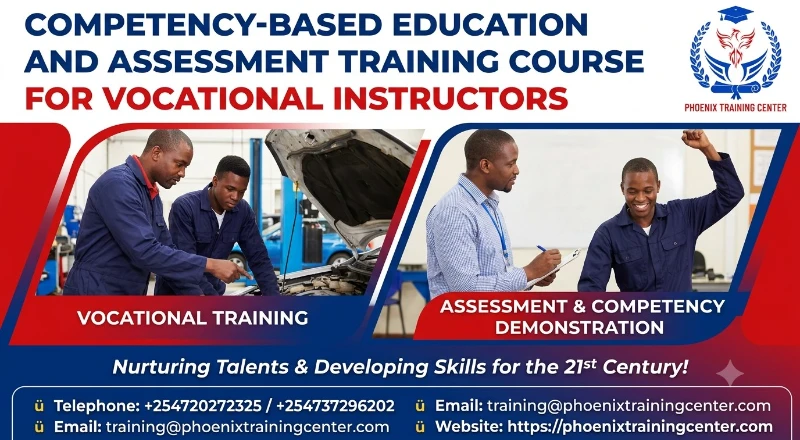
Course Overview
The Competency-Based Education and Assessment Training Course for Vocational Instructors is a comprehensive professional development program designed to equip Technical and Vocational Education and Training (TVET) educators with the pedagogical shifts required for competency-based frameworks. As industries globally demand more direct, skills-verified expertise, vocational training must align its methods with industry-standard performance metrics. This course empowers instructors to move away from traditional time-based learning models toward dynamic, learner-centered instruction that validates actual workplace capabilities and skills mastery.
Throughout this intensive five-day course, participants will dive into the foundational concepts of Competency-Based Education (CBE) and Competency-Based Assessment (CBA). The topics systematically cover the development of occupational profiles, writing precise learning outcomes, designing hands-on training materials, and implementing robust formative and summative assessment strategies. Instructors will also explore institutional quality assurance, internal moderation, integration of digital educational technologies, and strategies for establishing meaningful industry collaborations to ensure training remains modern, relevant, and directly linked to employment.
Upon the successful completion of this Competency-Based Education and Assessment Training Course for Vocational Instructors, participants will be able to:
ü Deconstruct occupational standards to build highly targeted, industry-aligned competency training frameworks.
ü Design and execute interactive, learner-centered lesson plans tailored for diverse vocational training settings.
ü Develop reliable, valid, and fair assessment instruments that effectively measure practical skills and workplace competencies.
ü Establish quality assurance mechanisms and moderation workflows to preserve the integrity of certification outcomes.
ü Integrate modern educational technologies and digital simulations into hands-on vocational workshop practices.
ü Facilitate Recognition of Prior Learning (RPL) processes to accurately evaluate and certify non-formal work experiences.
Training Methodology
The course is designed to be highly interactive, challenging and stimulating. It will be an instructor led training and will be delivered using a blended learning approach comprising of:
ü Interactive lectures and multimedia presentations outlining core instructional designs
ü Facilitated group work, collaborative curriculum mapping exercises, and peer feedback sessions
ü Hands-on workplace simulation workshops focusing on practical tool design and assessment validation
ü Case study analyses focusing on successful global implementations of TVET competency systems
ü Supervised micro-teaching and mock assessment delivery sessions followed by professional feedback
Our facilitators are seasoned industry professionals with years of expertise in their chosen fields. All facilitation and course materials will be offered in English.
Who Should Attend?
This Competency-Based Education and Assessment Training Course for Vocational Instructors would be suitable for, but not limited to:
ü Vocational School Instructors and Technical Trainers
ü TVET Institution Heads and Academic Directors
ü Curriculum Developers Specializing in Occupational Skills Training
ü Industrial Training Officers and Workplace Mentors
ü Internal and External Assessment Moderators
ü Quality Assurance Officers Within Technical Education Boards
Personal Benefits
ü Enhance instructional and assessment competencies to align with modern international TVET benchmarks.
ü Develop a professional portfolio featuring custom-designed competency rubrics and instructional lesson plans.
ü Improve career mobility and expert standing as a certified practitioner in competency-based learning paradigms.
Organizational Benefits
ü Boost graduate employability rates by offering training programs explicitly tailored to workplace requirements.
ü Standardize assessment strategies across different departments, mitigating inconsistencies in student evaluations.
ü Attain compliance with national and regional qualification frameworks, strengthening institutional certification credibility.
ü Course Duration: 5 Days
ü Training Fee:
o Physical Training: USD 1,500
o Online / Virtual Training: USD 1,000
Module 1: Foundations of Competency-Based Education (CBE)
ü Shifting from time-based traditional teaching to outcome-based learning structures
ü Core pillars and defining characteristics of successful global CBE models
ü The evolving role of the vocational instructor as an active learning facilitator
ü Identifying and addressing systemic institutional barriers to CBE implementation
ü Practical Session: Conducting a comparative analysis mapping out the shift from traditional syllabi to competency profiles
Module 2: Occupational Standards and Curriculum Mapping
ü Deciphering industry occupational standards and functional job frameworks
ü Translating market job descriptions into actionable, measurable learning units
ü Structuring balanced modules combining core technical capabilities and soft skills
ü Establishing critical prerequisite pathways and flexible modular tracking
ü Practical Session: Developing an occupational task matrix for a specific technical domain
Module 3: Designing Learner-Centered Instructional Materials
ü Writing clear, unambiguous performance criteria and specific learning outcomes
ü Developing comprehensive student learning guides and structured self-paced packets
ü Designing contextualized instructional aids reflecting real-world workplace environments
ü Adapting instructional materials for learners with varying literacy and learning needs
ü Practical Session: Creating a self-guided learning module complete with performance criteria check sheets
Module 4: Instructional Strategies for Vocational Classrooms
ü Structuring effective project-based learning (PBL) inside technical workshops
ü Managing active learning rotation schedules for specialized laboratory equipment
ü Differentiating classroom instruction without compromising uniform performance benchmarks
ü Fostering critical problem-solving skills through real-world maintenance scenarios
ü Practical Session: Conducting a peer-reviewed micro-teaching simulation showcasing interactive facilitation
Module 5: Principles of Competency-Based Assessment (CBA)
ü Key differences distinguishing CBA systems from traditional grading mechanisms
ü Upholding the four core principles of assessment: Validity, Reliability, Flexibility, and Fairness
ü Triangulating assessment data using direct, indirect, and supplementary evidence forms
ü Ethical obligations and managing conflicts of interest in practical testing environments
ü Practical Session: Auditing flawed assessment scenarios to identify and correct violations of fairness or validity
Module 6: Developing Practical Assessment Instruments and Rubrics
ü Designing comprehensive observation checklists for complex procedural steps
ü Constructing analytical and holistic rubrics for tangible product evaluations
ü Formulating supplementary oral and written tests to verify underpinning technical knowledge
ü Establishing transparent threshold definitions for determining "Competent" vs. "Not Yet Competent"
ü Practical Session: Developing a complete practical performance assessment instrument and accompanying rubric
Module 7: Implementing Formative and Summative Workplace Evaluations
ü Structuring continuous formative feedback loops to guide student development
ü Managing administrative logbooks and student portfolios as legal assessment records
ü Conducting high-stakes summative skills tests under simulated workplace pressures
ü Providing constructive feedback and remediation action plans for deferred candidates
ü Practical Session: Roleplaying an assessment debriefing session to deliver constructive performance feedback
Module 8: Quality Assurance and Internal Assessment Moderation
ü Designing pre-assessment and post-assessment verification workflows
ü Establishing standardized internal moderation processes to align assessor judgments
ü Mitigating assessor bias through calibration sessions and blind reviews
ü Reviewing, tracking, and updating outdated assessment tools based on industry changes
ü Practical Session: Conducting a mock internal moderation meeting on a set of student portfolios
Module 9: Digital Tools and Simulation in Vocational Training
ü Leveraging Learning Management Systems (LMS) to track individual competency milestones
ü Integrating Virtual Reality (VR) and digital simulators for high-risk industrial tasks
ü Using digital portfolios for live video evidence collection in technical trades
ü Designing blended delivery models that maximize hands-on workshop hours
ü Practical Session: Configuring a digital competency matrix and tracking dashboard on an educational platform
Module 10: Recognition of Prior Learning (RPL) Frameworks
ü Key operational policies governing RPL pathways in vocational spaces
ü Guiding experienced adult learners through the portfolio construction phase
ü Methods for checking authenticity, sufficiency, and currency of past work evidence
ü Designing specialized challenge tests for rapid skill validation
ü Practical Session: Evaluating a simulated portfolio application to determine RPL credits
About Our Trainers
Our facilitators are seasoned TVET pedagogical specialists, industry veterans, and accredited competency assessors with decades of collective global experience. They possess deep foundational expertise in designing and implementing vocational education frameworks across Africa, Europe, and Asia. Having served as curriculum advisors to national training authorities and industrial quality boards, they bring practical, reality-grounded strategies into the lecture room, ensuring that instructors walk away with real, implementable tools rather than just abstract theoretical frameworks.
Quality Statement
Phoenix Training Center is dedicated to delivering exceptional professional capacity-building programs that drive measurable workplace impact. Our courses are subject to rigorous content validation processes, incorporating the latest educational methodologies, international standards, and industry feedback. We maintain an uncompromising commitment to educational excellence, ensuring that our training environments, learning resource kits, and delivery strategies fully support every participant's journey toward total instructional mastery.
Tailor-Made Courses
We understand that every organization has unique challenges and opportunities as well as unique training needs. Phoenix Training Center offers tailor-made courses designed to address specific requirements and challenges faced by your team or organization. Whether you need a customized curriculum, a specific duration, or on-site delivery, we can adapt our expertise to provide a training solution that perfectly aligns with your objectives. We can customize this Course to focus on your industry, specific risk profile, or internal stakeholder dynamics. Contact us to discuss how we can create a bespoke training program that maximizes value and impact for your team. For further inquiries, please contact us on Tel: +254720272325 / +254737296202 or Email training@phoenixtrainingcenter.com.
Admission Criteria
ü Participants should be reasonably proficient in English.
ü Applicants must live up to Phoenix Center for Policy, Research and Training admission criteria.
Terms and Conditions
ü Discounts: Organizations sponsoring Four Participants will have the 5th attend Free
ü What is catered for by the Course Fees: Fees cater for all requirements for the training – Learning materials, Lunches, Teas, Snacks and Certification. All participants will additionally cater for their travel and accommodation expenses, visa application, insurance, and other personal expenses.
ü Certificate Awarded: Participants are awarded Certificate of Completion at the end of the training.
ü Course Improvement: The program content shown here is for guidance purposes only. Our continuous course improvement process may lead to changes in topics and course structure.
ü Approval of Course: Our Programs are NITA Approved. Participating organizations can therefore claim reimbursement on fees paid in accordance with NITA Rules.
Booking for Training
Kindly send an email to the Training Officer on training@phoenixtrainingcenter.com and we will send you a registration form. We advise you to book early to avoid missing a seat to this training. Or call us on +254720272325 / +254737296202
Payment Options
We provide 3 payment options, choose one for your convenience, and kindly make payments a week before the training starts (at least 5 to 7 days before the Training start date) to reserve your seat:
ü Groups of 5 People and Above – Cheque Payments to: Phoenix Center for Policy, Research and Training Limited should be paid in advance, a week before the training starts.
ü Invoice: We can send a bill directly to you or your company.
ü Deposit directly into Bank Account (Account details provided upon request)
Cancellation Policy
ü Payment for all courses includes a registration fee, which is non-refundable, and equals 15% of the total sum of the course fee.
ü Participants may cancel attendance 14 days or more prior to the training commencement date.
ü No refunds will be made 14 days or less before the training commencement date. However, participants who are unable to attend may opt to attend a similar training course at a later date or send a substitute participant provided the participation criteria have been met.
Accommodation and Airport Pick-up
For physical training attendees, we can assist with recommendations for accommodation near the training venue. Airport pick-up services can also be arranged upon request to ensure a smooth arrival. Please inform us of your travel details in advance if you require these services. For reservations contact the Training Officer on Email: training@phoenixtrainingcenter.com or on Tel: +254720272325 / +254737296202.
| Course Dates | Venue | Fees | Enroll |
|---|---|---|---|
| Sep 21 - Sep 25 2026 | Naivasha | $1,500 |
|
| Sep 28 - Oct 02 2026 | Zoom | $1,000 |
|
| Oct 05 - Oct 09 2026 | Nairobi | $1,500 |
|
| Oct 12 - Oct 16 2026 | Nairobi | $1,500 |
|
| Oct 19 - Oct 23 2026 | Nakuru | $1,500 |
|
| Oct 26 - Oct 30 2026 | Naivasha | $1,500 |
|

Phoenix Training Center
Typically replies in minutes