
Course Overview
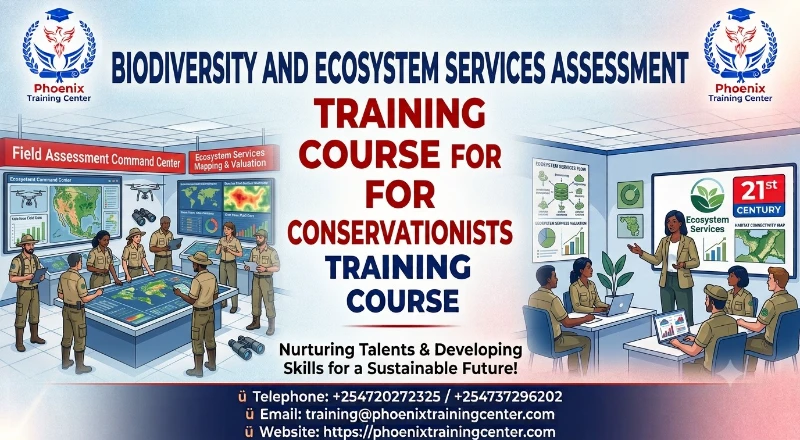
This professional masterclass provides an intensive dive into modern environmental accounting, ecological economic frameworks, and field assessment methodologies. Understanding how to measure ecological health and value nature's contributions to society is paramount as global market structures increasingly penalize environmental degradation and reward sustainable resource management. This program delivers a balanced synthesis of field-level conservation strategies and commercial sustainability practices, incorporating the core concepts of a dedicated biodiversity business course alongside the strategic frameworks typical of advanced biodiversity corporate training.
The curriculum is structured to guide participants through the technical steps of quantifying baseline biodiversity data and mapping localized ecosystem services. Over five days, attendees will explore critical industry metrics including corporate risk frameworks like the Taskforce on Nature-related Financial Disclosures (TNFD), nature-based solutions, habitat connectivity modeling, and biodiversity credit markets. By integrating technical ecological tools with commercial value chain analyses, this comprehensive biodiversity and ecosystem services assessment training course for conservationists, biodiversity business course, biodiversity corporate training enables professionals to build viable, data-driven pathways that bridge deep field conservation with executive-level corporate decision-making.
Upon the successful completion of this Biodiversity and Ecosystem Services Assessment Training Course for Conservationists, participants will be able to:
ü Master field-ready methodologies for assessing habitat quality and quantifying localized biodiversity baselines
ü Map and value ecosystem services using spatial modeling tools and environmental economic frameworks
ü Align conservation strategies with corporate ESG requirements, corporate sustainability metrics, and international standards
ü Design functional corporate risk mitigation strategies based on the mitigation hierarchy of avoid, minimize, restore, and offset
ü Evaluate market mechanisms for nature finance, including biodiversity credits, carbon-plus credits, and conservation bonds
Training Methodology
The course is designed to be highly interactive, challenging and stimulating. It will be an instructor led training and will be delivered using a blended learning approach comprising of:
ü Interactive lectures covering standard ecological assessment parameters and corporate reporting matrices
ü Hands-on laboratory sessions using geographic information systems (GIS) and ecosystem services mapping software
ü Case study analysis of successful corporate-conservation partnerships and green business models
ü Structured group design sessions focused on building a commercial-grade biodiversity management plan
ü Daily open-floor debriefings and troubleshooting panels to review practical metrics and real-world compliance barriers
Our facilitators are seasoned industry professionals with years of expertise in their chosen fields. All facilitation and course materials will be offered in English.
Who Should Attend?
This Biodiversity and Ecosystem Services Assessment Training Course for Conservationists would be suitable for, but not limited to:
ü Conservation Field Officers
ü Corporate Sustainability Directors
ü Environmental Impact Assessment Consultants
ü ESG Risk Analysts
ü Natural Resource Management Officers
ü Sustainability Compliance Auditors
Personal Benefits
ü Confidently bridge the technical gap between scientific field biology and boardroom commercial metrics
ü Command advanced tools in spatial mapping and economic valuation of diverse ecosystem assets
ü Advance professional credibility as a certified specialist capable of directing corporate sustainability overhauls
ü Develop structured frameworks to measure, track, and report on organizational nature-positive impacts
Organizational Benefits
ü Safeguard operational assets against emerging regulatory penalties and climate-driven natural resource scarcity
ü Secure access to green capital markets by establishing rigorous, science-based disclosure pathways
ü Design optimized, cost-efficient corporate conservation initiatives that yield measurable return on investment (ROI)
ü Drive institutional thought leadership by deploying forward-thinking corporate nature policies ahead of local mandates
ü Course Duration: 5 Days
ü Training Fee:
o Physical Training: USD 1,500
o Online / Virtual Training: USD 1,000
Module 1: Principles of Biodiversity and Ecosystem Services
ü Taxonomy of ecosystem services: provisioning, regulating, cultural, and supporting functions
ü Understanding the global drivers of biodiversity loss and systemic ecosystem breakdown
ü Core principles governing international biodiversity frameworks and global targets
ü Interdependence of ecological integrity, community livelihoods, and commercial resource pipelines
ü Practical Session: Constructing a localized conceptual ecosystem model mapping direct dependencies and environmental stressors
Module 2: Biodiversity Baseline Assessment and Field Methodologies
ü Designing statistically rigorous flora and fauna sampling plots across distinct biomes
ü Deploying modern monitoring techniques: remote sensing, camera trapping, and environmental DNA (eDNA)
ü Calculating standard ecological indices: Shannon-Wiener diversity, Simpson's dominance, and species richness
ü Identifying critical habitats, high conservation value (HCV) zones, and endangered species red-lists
ü Practical Session: Evaluating and analyzing a field-collected raw biodiversity dataset to isolate species distribution anomalies
Module 3: Mapping and Quantifying Ecosystem Services
ü Introduction to spatial modeling software and remote sensing datasets for natural asset tracking
ü Modeling hydrological regulation, soil retention, carbon sequestration, and pollination networks
ü Establishing baseline ecosystem supply vs. public and commercial demand parameters
ü Interpreting landscape connectivity, fragmentation metrics, and habitat degradation trends
ü Practical Session: Utilizing spatial tools to build a predictive map of localized water purification and soil retention services
Module 4: Environmental Economics and Natural Capital Valuation
ü Paradigms of economic value: Total Economic Value (TEV) framework and non-market assets
ü Direct vs. indirect valuation methods: hedonic pricing, travel cost, and contingent valuation
ü Market-based proxy valuation approaches for pricing regulating and provisioning services
ü Navigating the ethical debates, structural limitations, and policy utility of monetization
ü Practical Session: Conducting a comprehensive cost-benefit analysis incorporating quantified natural capital asset values
Module 5: The Corporate Nature Relationship: Risk and Materiality
ü Defining dependencies, impacts, risks, and opportunities across corporate value chains
ü Analyzing physical risks, regulatory liabilities, and reputational exposures of ecosystem decay
ü Introduction to the Taskforce on Nature-related Financial Disclosures (TNFD) LEAP approach
ü Integrating biodiversity risk metrics directly into enterprise risk management (ERM) matrix tools
ü Practical Session: Executing a rapid materiality assessment for a specific industry supply chain against nature dependencies
Module 6: Business Applications: Frameworks of a Modern Biodiversity Business Course
ü Exploring commercial models founded on biodiversity conservation and sustainable yield
ü Opportunities in certified regenerative agriculture, agroforestry, and ecotourism markets
ü Evaluating operational standards for corporate supply chain tracing and deforestation-free sourcing
ü Managing stakeholder conflicts and building equitable benefit-sharing models with local communities
ü Practical Session: Reviewing a commercial supply chain to identify and eliminate blind spots linked to biodiversity degradation
Module 7: Implementing Corporate Strategy through Biodiversity Corporate Training
ü Designing internal communication plans to promote institutional sustainability buy-in
ü Translating high-level corporate nature commitments into localized facility operational workflows
ü Developing key performance indicators (KPIs) to track internal net-positive biodiversity metrics
ü Auditing third-party vendor performance against corporate environmental compliance mandates
ü Practical Session: Developing an internal corporate campaign template tailored to optimize employee adoption of a new nature policy
Module 8: The Mitigation Hierarchy and Biodiversity Offsetting Systems
ü Strict application of the hierarchy: absolute avoidance vs. remediation minimization tactics
ü Operational rules for designing and verifying long-term on-site habitat restoration schemes
ü Principles of biodiversity offsets: ensuring ecological equivalence, additionality, and permanence
ü Designing and monitoring habitat banking systems and environmental credit generation pools
ü Practical Session: Designing a comprehensive biodiversity offsetting strategy to mitigate a simulated industrial project footprint
Module 9: Financing Mechanisms and Nature-Based Solution Architectures
ü Reviewing the landscape of green bonds, sustainability-linked loans, and philanthropic capital
ü Understanding the structure, verification, and scaling of emerging global biodiversity credit markets
ü Technical design criteria for high-integrity nature-based solutions (NbS) projects
ü Evaluating carbon-plus-biodiversity standards for combined climate-nature capital allocation
ü Practical Session: Structuring a project investment pitch for an ecosystem restoration project targeting international impact investors
Module 10: Designing a Comprehensive Corporate Biodiversity Action Plan
ü Synthesizing field data, spatial models, and corporate disclosure metrics into a single map
ü Setting realistic, science-based targets for corporate nature recovery across multi-year cycles
ü Structuring monitoring, reporting, and external third-party verification timelines
ü Formulating long-term contingency budgets and adaptive management protocol triggers
ü Practical Session: Defending a fully drafted Biodiversity Action Plan before a mock executive board panel for approval
About Our Trainers
Our senior instructional panel comprises seasoned conservation scientists, resource economists, and ESG compliance consultants with extensive international field experience. Each trainer holds advanced postgraduate credentials and has directed large-scale ecological assessments or corporate environmental overhauls across agricultural, mining, and infrastructural sectors. By blending raw ecological science with boardroom financial metrics, our instructors ensure that participants acquire deep technical expertise paired with actionable executive insights.
Quality Statement
Phoenix Training Center is dedicated to providing high-caliber, practical knowledge to professionals leading critical sustainability sectors. We subject our modules to rigorous peer reviews and ensure our curriculum stays aligned with the newest international frameworks, including TNFD, SBTN, and NITA requirements. Our commitment to excellence guarantees that every participant departs with the practical skills, technical data tools, and analytical confidence necessary to pioneer measurable, nature-positive transformations within their respective organizations.
Tailor-Made Courses
We understand that every organization has unique challenges and opportunities as well as unique training needs. Phoenix Training Center offers tailor-made courses designed to address specific requirements and challenges faced by your team or organization. Whether you need a customized curriculum, a specific duration, or on-site delivery, we can adapt our expertise to provide a training solution that perfectly aligns with your objectives. We can customize this Course to focus on your industry, specific risk profile, or internal stakeholder dynamics. Contact us to discuss how we can create a bespoke training program that maximizes value and impact for your team. For further inquiries, please contact us on Tel: +254720272325 / +254737296202 or Email training@phoenixtrainingcenter.com.
Admission Criteria
ü Participants should be reasonably proficient in English.
ü Applicants must live up to Phoenix Center for Policy, Research and Training admission criteria.
Terms and Conditions
ü Discounts: Organizations sponsoring Four Participants will have the 5th attend Free
ü What is catered for by the Course Fees: Fees cater for all requirements for the training – Learning materials, Lunches, Teas, Snacks and Certification. All participants will additionally cater for their travel and accommodation expenses, visa application, insurance, and other personal expenses.
ü Certificate Awarded: Participants are awarded Certificate of Completion at the end of the training.
ü Course Improvement: The program content shown here is for guidance purposes only. Our continuous course improvement process may lead to changes in topics and course structure.
ü Approval of Course: Our Programs are NITA Approved. Participating organizations can therefore claim reimbursement on fees paid in accordance with NITA Rules.
Booking for Training
Kindly send an email to the Training Officer on training@phoenixtrainingcenter.com and we will send you a registration form. We advise you to book early to avoid missing a seat to this training. Or call us on +254720272325 / +254737296202
Payment Options
We provide 3 payment options, choose one for your convenience, and kindly make payments a week before the training starts (at least 5 to 7 days before the Training start date) to reserve your seat:
ü Groups of 5 People and Above – Cheque Payments to: Phoenix Center for Policy, Research and Training Limited should be paid in advance, a week before the training starts.
ü Invoice: We can send a bill directly to you or your company.
ü Deposit directly into Bank Account (Account details provided upon request)
Cancellation Policy
ü Payment for all courses includes a registration fee, which is non-refundable, and equals 15% of the total sum of the course fee.
ü Participants may cancel attendance 14 days or more prior to the training commencement date.
ü No refunds will be made 14 days or less before the training commencement date. However, participants who are unable to attend may opt to attend a similar training course at a later date or send a substitute participant provided the participation criteria have been met.
Accommodation and Airport Pick-up
For physical training attendees, we can assist with recommendations for accommodation near the training venue. Airport pick-up services can also be arranged upon request to ensure a smooth arrival. Please inform us of your travel details in advance if you require these services. For reservations contact the Training Officer on Email: training@phoenixtrainingcenter.com or on Tel: +254720272325 / +254737296202.
| Course Dates | Venue | Fees | Enroll |
|---|---|---|---|
| Sep 21 - Sep 25 2026 | Nairobi | $1,500 |
|
| Sep 28 - Oct 02 2026 | Zoom | $1,000 |
|
| Oct 05 - Oct 09 2026 | Nairobi | $1,500 |
|
| Oct 12 - Oct 16 2026 | Naivasha | $1,500 |
|
| Oct 19 - Oct 23 2026 | Nairobi | $1,500 |
|
| Oct 26 - Oct 30 2026 | Nairobi | $1,500 |
|

Phoenix Training Center
Typically replies in minutes