
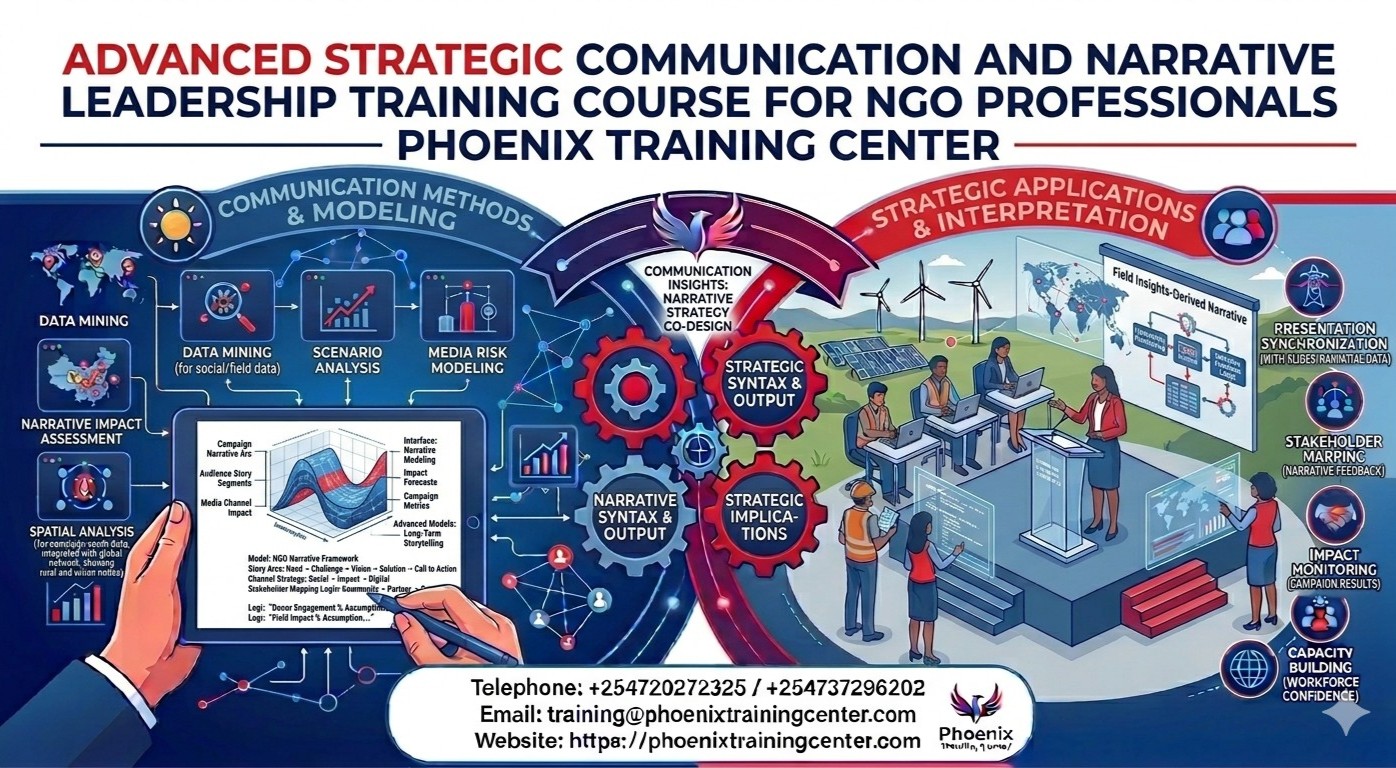
Course Overview
In an increasingly crowded humanitarian and development landscape, the ability to communicate with clarity and purpose is a non-profit’s greatest asset. This training course is specifically designed for NGO communications leads and specialists who need to transition from tactical execution to strategic influence. The course focuses on how to align messaging with organizational mission, manage institutional reputation, and mobilize resources through compelling storytelling and data-driven advocacy.
The curriculum covers a broad range of critical topics including strategic messaging frameworks, digital storytelling, crisis communication, and internal brand alignment. Participants will explore advanced techniques for stakeholder engagement, donor relations, and the use of emerging AI tools in content creation. Through a mix of theoretical insights and hands-on workshops, the course equips attendees with the skills to lead a high-performing communications function that drives measurable social impact.
Upon the successful completion of this Advanced Strategic Communication and Narrative Leadership Training Course for NGO Professionals participants will be able to:
ü Design and implement a comprehensive strategic communications plan aligned with NGO goals.
ü Master the art of ethical storytelling to drive donor engagement and public empathy.
ü Manage organizational reputation and navigate communication crises effectively.
ü Utilize digital analytics and AI tools to optimize content reach and impact.
ü Bridge the gap between technical program data and persuasive public messaging.
ü Foster a "communications culture" within their organization to empower all staff as brand ambassadors.
Training Methodology
The course is designed to be highly interactive, challenging and stimulating. It will be an instructor led training and will be delivered using a blended learning approach comprising of:
ü Interactive masterclasses and expert-led presentations
ü Real-world NGO case study analysis and "rebranding" exercises
ü Digital laboratory sessions for content creation and analytics
ü Role-playing for media interviews and crisis management
ü Collaborative strategy drafting and peer review sessions
ü Practical sessions embedded in every module for immediate skill application
Our facilitators are seasoned industry professionals with years of expertise in their chosen fields. All facilitation and course materials will be offered in English.
Who Should Attend?
This Advanced Strategic Communication and Narrative Leadership Training Course for NGO Professionals would be suitable for, but not limited to:
ü NGO Communications Leads and Directors
ü Public Relations Managers in the Development Sector
ü Social Media Managers for Non-Profits
ü Fundraising and Resource Mobilization Officers
ü Advocacy and Campaign Managers
ü Program Managers responsible for donor reporting
ü Corporate Social Responsibility (CSR) Specialists
ü Executive Directors of Small to Medium NGOs
Personal Benefits
Participants will elevate their professional profile from "content creator" to "strategic advisor," gaining the confidence to lead high-stakes communication initiatives. You will develop a sophisticated portfolio of strategic tools, improve your executive presence, and connect with a network of global NGO communication peers.
Organizational Benefits
Organizations will experience improved brand visibility, higher donor retention rates, and more effective advocacy outcomes. By professionalizing the communication function, NGOs can ensure consistent messaging across all platforms, minimize reputational risks during crises, and demonstrate greater transparency to stakeholders.
ü Course Duration: 5 Days
ü Training Fee
o Physical Training: USD 1,200
o Online / Virtual Training: USD 800
Module 1: Foundations of Strategic Communication in the Non-Profit Sector
ü Defining the role of the Comms Lead in the modern NGO
ü Aligning communication goals with the Strategic Plan
ü The transition from reactive to proactive communication
ü Global trends in non-profit branding and messaging
ü Practical Session: Conducting a SWOT analysis of your organization’s current communication status
Module 2: Stakeholder Analysis and Audience Segmentation
ü Identifying and mapping primary and secondary audiences
ü Creating detailed "Donor Personas" for targeted messaging
ü Psychographics vs. Demographics in the development sector
ü Tailoring messages for local communities vs. international donors
ü Practical Session: Developing an Audience Engagement Matrix for a specific project
Module 3: The Power of Narrative: Ethical Storytelling for Impact
ü The "Hero’s Journey" framework in a development context
ü Avoiding "Poverty Porn" and maintaining dignity in imagery
ü Interview techniques for collecting powerful field stories
ü Structuring stories for maximum emotional and financial response
ü Practical Session: Drafting a 300-word "Impact Story" using the ethical storytelling checklist
Module 4: Digital Transformation and Social Media Strategy
ü Selecting the right platforms for your NGO’s mission
ü Leveraging AI for content ideation and draft generation
ü Paid vs. Organic reach: Budgeting for social impact
ü Best practices for non-profit email marketing and newsletters
ü Practical Session: Designing a 30-day digital content calendar for a fundraising campaign
Module 5: Crisis Communication and Reputational Risk Management
ü Identifying potential "Red Flag" issues in NGO operations
ü Developing a Crisis Communication Manual and response team
ü Managing the first "Golden Hour" of a PR crisis
ü Messaging strategies for scandal, funding cuts, or project failure
ü Practical Session: Simulated crisis response drill: Drafting a press statement under pressure
Module 6: Advocacy Communication and Policy Influence
ü Translating technical data into "Policy Asks"
ü Designing awareness campaigns that trigger behavioral change
ü The role of infographics and data visualization in advocacy
ü Mobilizing grassroots support through digital toolkits
ü Practical Session: Creating an "Advocacy One-Pager" for a legislative meeting
Module 7: Internal Communications and Organizational Culture
ü Breaking silos: Integrating Comms with Program and Finance teams
ü Developing internal newsletters and staff briefing protocols
ü Empowering field staff as content contributors
ü Managing "Executive Presence" for NGO leadership
ü Practical Session: Designing an internal "Comms Toolkit" for non-communication staff
Module 8: Content Strategy and Visual Identity Management
ü Maintaining brand consistency across multiple country offices
ü Photo and video management: Storage, ethics, and consent
ü Basic design principles for non-designers
ü Using Canva and other tools for professional NGO branding
ü Practical Session: Conducting a "Brand Audit" of your organization’s visual assets
Module 9: Media Relations and Press Engagement for NGOs
ü Building a "Media Database" of journalists in the sector
ü The art of the Pitch: How to get your NGO in the news
ü Preparing experts for radio and TV interviews
ü Organizing successful press conferences and site visits
ü Practical Session: Mock media interview: Dealing with "tough questions" on camera
Module 10: Monitoring, Evaluation, and Impact Reporting
ü Setting KPIs for communication (Reach, Engagement, Conversion)
ü Using Google Analytics and social media insights
ü Communicating ROI to the Board and Donors
ü Annual Report design: Beyond the financial statements
ü Practical Session: Developing a "Comms Impact Dashboard" for quarterly reporting
About Our Trainers
Our facilitators are award-winning communication strategists with decades of experience leading global campaigns for major NGOs, UN agencies, and social enterprises. They possess deep expertise in narrative psychology, digital media, and international development. Each trainer brings a wealth of "battle-tested" advice from the frontlines of humanitarian communication and high-level advocacy.
Quality Statement
Phoenix Center for Policy, Research and Training is committed to delivering excellence. Our courses undergo rigorous internal and external audits to ensure they meet the highest international standards of professional training. We pride ourselves on providing current, relevant, and evidence-based content that empowers professionals to achieve tangible results.
Tailor-Made Courses
We understand that every organization has unique challenges and opportunities as well as unique training needs. Phoenix Training Center offers tailor-made courses designed to address specific requirements and challenges faced by your team or organization. Whether you need a customized curriculum, a specific duration, or on-site delivery, we can adapt our expertise to provide a training solution that perfectly aligns with your objectives.We can customize this Course to focus on your industry, specific risk profile, or internal stakeholder dynamics. Contact us to discuss how we can create a bespoke training program that maximizes value and impact for your team. For further inquiries, please contact us on Tel: +254720272325 / +254737296202 or Email training@phoenixtrainingcenter.com
ü Participants should be reasonably proficient in English.
ü Applicants must live up to Phoenix Center for Policy, Research and Training admission criteria.
Terms and Conditions
ü Discounts: Organizations sponsoring Four Participants will have the 5th attend Free
ü What is catered for by the Course Fees: Fees cater for all requirements for the training – Learning materials, Lunches, Teas, Snacks and Certification. All participants will additionally cater for their travel and accommodation expenses, visa application, insurance, and other personal expenses.
ü Certificate Awarded: Participants are awarded Certificates of Participation at the end of the training.
ü The program content shown here is for guidance purposes only. Our continuous course improvement process may lead to changes in topics and course structure.
ü Approval of Course: Our Programs are NITA Approved. Participating organizations can therefore claim reimbursement on fees paid in accordance with NITA Rules.
Booking for Training
Simply send an email to the Training Officer on training@phoenixtrainingcenter.com and we will send you a registration form. We advise you to book early to avoid missing a seat to this training. Or call us on +254720272325 / +254737296202
Payment Options
We provide 3 payment options, choose one for your convenience, and kindly make payments at least 5 days before the Training start date to reserve your seat:
ü Groups of 5 People and Above – Cheque Payments to: Phoenix Center for Policy, Research and Training Limited should be paid in advance, 5 days to the training.
ü Invoice: We can send a bill directly to you or your company.
ü Deposit directly into Bank Account (Account details provided upon request)
Cancellation Policy
ü Payment for all courses includes a registration fee, which is non-refundable, and equals 15% of the total sum of the course fee.
ü Participants may cancel attendance 14 days or more prior to the training commencement date.
ü No refunds will be made 14 days or less before the training commencement date. However, participants who are unable to attend may opt to attend a similar training course at a later date or send a substitute participant provided the participation criteria have been met.
Accommodation and Airport Transfer
For physical training attendees, we can assist with recommendations for accommodation near the training venue. Airport pick-up services can also be arranged upon request to ensure a smooth arrival. Please inform us of your travel details in advance if you require these services. For reservations contact the Training Officer on Email: training@phoenixtrainingcenter.com or on Tel: +254720272325 / +254737296202
| Course Dates | Venue | Fees | Enroll |
|---|

Phoenix Training Center
Typically replies in minutes