
Course Overview
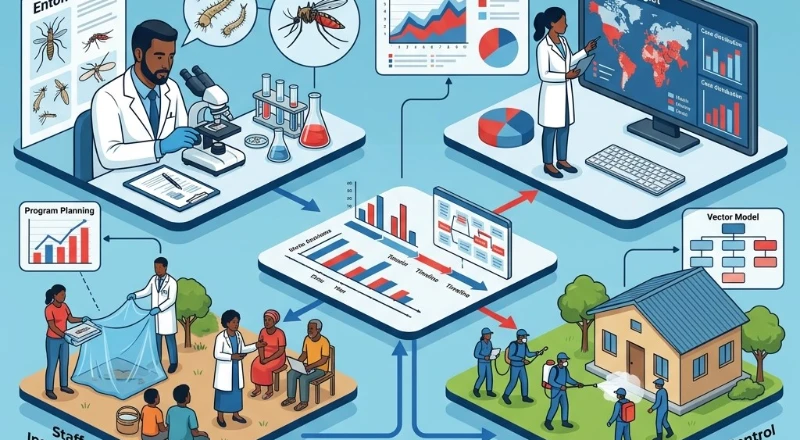
The Malaria Control Program Management Professional Training Course is designed to equip public health professionals, disease control coordinators, and healthcare leaders with the operational and strategic skills needed to design, implement, and evaluate impactful malaria intervention programs. As global health mandates shift from control to eradication, strategic management of vector interventions, therapeutic supply chains, and epidemiological intelligence becomes vital. This intensive program bridges cutting-edge epidemiological theory with practical fieldwork reality, enabling managers to deploy resources efficiently and combat insecticide and drug resistance within dynamic public health landscapes.
Throughout this comprehensive 10-day training program, participants will systematically explore the complete life cycle of malaria control initiatives, including disease surveillance, multi-sector partnerships, vector ecology, behavioral change communications, and financial management framework architectures. The course unpacks complex monitoring and evaluation mechanisms, data-driven decision-making toolkits, and pharmaceutical supply chains. By analyzing real-world global health case studies and practicing spatial mapping, attendees will build the leadership capacity to drive national and regional malaria elimination targets successfully.
Upon the successful completion of this Malaria Control Program Management Professional Training Course, participants will be able to:
ü Develop strategic capabilities in designing, budgeting, and executing national and community-level malaria control master plans.
ü Introduce modern entomological monitoring, vector control methods, and insecticide resistance management frameworks.
ü Strengthen health information systems through the utilization of digital malaria surveillance and spatial data modeling toolkits.
ü Master supply chain logistics for essential diagnostics, Artemisinin-based Combination Therapies (ACTs), and long-lasting insecticidal nets.
ü Cultivate resource mobilization, donor reporting compliance, and cross-sector stakeholder alignment strategies.
Training Methodology
The course is designed to be highly interactive, challenging and stimulating. It will be an instructor led training and will be delivered using a blended learning approach comprising of:
ü Interactive multi-media lectures and operational debriefs led by veteran global health experts.
ü Computer-based lab practicals utilizing open-source epidemiological software and data visualization dashboards.
ü Group strategic planning simulations focusing on resource allocation trade-offs under epidemic conditions.
ü Guided case study appraisals analyzing successful regional elimination matrices and bottleneck bottlenecks.
ü Scenario-based role-playing exercises addressing community resistance, supply chain breakdowns, and donor reallocations.
Our facilitators are seasoned industry professionals with years of expertise in their chosen fields. All facilitation and course materials will be offered in English.
Who Should Attend?
This Malaria Control Program Management Professional Training Course would be suitable for, but not limited to:
ü National and Regional Malaria Control Program Coordinators
ü Public Health Officers and Epidemic Response Managers
ü NGO Health Project Directors and Medical Logistics Officers
ü Epidemiologists and Vector Control Research Officers
ü Clinical Directors and Community Health Program Coordinators
ü Healthcare Policy Advisors and Global Health Consultants
Personal Benefits
ü Master the design, implementation, and scaling of integrated disease control programs, accelerating career upward mobility.
ü Gain confidence in articulating public health metrics, data strategies, and financial frameworks to global donors and ministries.
ü Advance analytical problem-solving skills to successfully untangle complex supply chain bottlenecks and community vaccine hesitancy.
ü Secure a recognized professional validation cementing specialized competence in managing high-stakes malaria elimination programs.
Organizational Benefits
ü Streamline project delivery metrics and minimize operational resource wastage through precise logframe planning and financial stewardship.
ü Advance the institutional capability to secure large-scale global financing via evidence-based, data-justified proposal frameworks.
ü Improve real-time health data collection accuracy, optimizing institutional responses to impending regional malaria outbreaks.
ü Elevate internal leadership capacities, cultivating self-reliant teams that execute compliance-driven project tracking independently.
ü Course Duration: 10 Days
ü Training Fee:
o Physical Training: USD 3,000
o Online / Virtual Training: USD 2,000
Module 1: Foundations of Malaria Epidemiology and Global Eradication Strategies
ü Parasite biology: Life cycles of Plasmodium falciparum, vivax, ovale, malariae, and knowlesi.
ü Global and regional malaria burdens: Trends, transmission dynamics, and high-risk demographic clusters.
ü Core pillars of the WHO Global Technical Strategy for Malaria.
ü Social determinants of health: Urbanization, migration, poverty, and malaria transmission links.
ü Practical Session: Constructing a comprehensive baseline epidemiological profile for a simulated high-burden endemic district.
Module 2: Strategic Design and Logical Frameworks for Malaria Programs
ü Translating national malaria strategic guidelines into actionable operational and annual work plans.
ü Developing robust logical frameworks (LogFrames) with measurable inputs, outputs, and impacts.
ü Risk identification, risk profiling, and formulation of institutional mitigation strategies.
ü Human resource optimization: Task-shifting, capacity auditing, and healthcare worker performance tracking.
ü Practical Session: Drafting a multi-year project LogFrame complete with performance targets and risk matrices for a regional program.
Module 3: Integrated Vector Management and Vector Ecology
ü Core biology and feeding behaviors of primary and secondary Anopheles vectors.
ü Designing and executing Long-Lasting Insecticidal Net (LLIN) mass distribution and continuous distribution matrices.
ü Indoor Residual Spraying (IRS) program management: Target selection, chemical options, and spray operations.
ü Environmental management, larval source management, and supplementary vector toolkits.
ü Practical Session: Formulating an operational deployment plan for an IRS campaign, including micro-planning, resource calculations, and community zoning.
Module 4: Entomological Surveillance and Insecticide Resistance Tracking
ü Setting up sentinel sites for longitudinal entomological monitoring and vector behavioral data collection.
ü Vector collection techniques: Pyrethrum spray catches, light traps, and human landing inhibitions.
ü Mechanics of insecticide resistance: Metabolic pathways, target-site mutations, and behavioral changes.
ü Utilizing the WHO susceptibility test kits and CDC bottle bioassays for resistance mapping.
ü Practical Session: Analyzing a raw entomological dataset to plot insecticide resistance trends and select alternative chemical classes.
Module 5: Diagnostic Frameworks and Case Management Optimization
ü Universal access to diagnosis: Light microscopy standards vs. Malaria Rapid Diagnostic Tests (RDTs).
ü Management guidelines for uncomplicated malaria: Artemisinin-based Combination Therapies (ACTs) protocols.
ü Clinical management of severe malaria: Parenteral artesunate deployment and intensive care pathways.
ü Tracking antimalarial drug efficacy and monitoring drug resistance markers.
ü Practical Session: Troubleshooting diagnostic diagnostic gaps at facility levels and drafting a clinical corrective action workflow.
Module 6: Chemoprevention Strategies and Vaccine Rollout Management
ü Intermittent Preventive Treatment in Pregnancy (IPTp) using Sulfadoxine-Pyrimethamine: Coverage optimization strategies.
ü Seasonal Malaria Chemoprevention (SMC) implementation plans for highly seasonal transmission settings.
ü Perinatal and child health chemoprevention variations: IPTi and post-discharge protocols.
ü Integrating malaria vaccines (e.g., RTS,S or R21) into routine Expanded Programs on Immunization (EPI).
ü Practical Session: Developing an implementation roadmap for a district-wide Seasonal Malaria Chemoprevention (SMC) campaign.
Module 7: Epidemiological Surveillance and Health Information Systems
ü Designing passive and active case detection structures across diverse transmission levels.
ü Strengthening DHIS2 platforms: Malaria module optimization, data entry timeliness, and completeness tracking.
ü Zero-reporting protocols, data validation rules, and minimizing community under-reporting biases.
ü Transforming raw clinical tally sheets into weekly and monthly epidemiological analytical dashboards.
ü Practical Session: Navigating a sample DHIS2 malaria dashboard to identify data reporting discrepancies and validate facility indicators.
Module 8: Digital Health Tools and Spatial Mapping for Outbreak Response
ü Application of geographic information systems (GIS) for stratification of malaria transmission risk zones.
ü Utilizing mobile health (mHealth) applications for community real-time case reporting and alert monitoring.
ü Predictive modeling: Integrating weather, temperature, and vegetation indexes for early warning structures.
ü Rapid response team mobilization: Protocols for investigating clusters in low-prevalence elimination zones.
ü Practical Session: Utilizing an open-source mapping application to locate transmission hotspots and map out targeted vector responses.
Module 9: Supply Chain Management and Procurement of Malaria Commodities
ü Quantification and forecasting of LLINs, RDTs, ACTs, and laboratory consumables using consumption and morbidity methods.
ü Procurement pipelines, international bidding frameworks, and lead-time optimization matrices.
ü Warehousing parameters: Cold-chain management, inventory rotation, and expiration minimization strategies.
ü Last-mile delivery networks: Managing stock transport to remote, peripheral health posts.
ü Practical Session: Conducting a comprehensive quantification exercise to calculate quarterly ACT needs while adjusting for seasonal consumption spikes.
Module 10: Quality Assurance of Diagnostics and Antimalarial Medicines
ü Constructing national quality control systems for RDT lots and slide microscopy cross-checking protocols.
ü Post-market surveillance methodologies for verifying chemical composition of circulating antimalarial pharmaceuticals.
ü Identifying counterfeit, sub-standard, and degraded malaria control commodities in public and private markets.
ü Standard operating procedures for pharmacovigilance and reporting adverse drug events.
ü Practical Session: Simulating a facility-level quality audit on RDT storage conditions and establishing corrective action plans.
Module 11: Social and Behavior Change Communication (SBCC) Campaigns
ü Behavioral frameworks: Identifying cultural, economic, and logistical barriers to LLIN usage and prompt treatment seeking.
ü Designing targeted messaging strategies across radio, television, print, and digital social media channels.
ü Community engagement strategies: Mobilizing religious, tribal, and youth leaders as advocacy champions.
ü Monitoring message exposure, recall accuracy, and subsequent behavior change correlation metrics.
ü Practical Session: Creating an SBCC campaign blueprint targeted at increasing early prenatal care and IPTp adherence among rural populations.
Module 12: Community-Based Malaria Interventions and Decentralized Care
ü Integrated Community Case Management (iCCM) guidelines: Training and equipping Community Health Workers (CHWs).
ü Supervision, payment structures, retention strategies, and motivation programs for rural health volunteers.
ü Supply chain linkages between central primary health facilities and community point-of-care distribution hubs.
ü Engaging the private sector: Retail drug shops, pharmacies, and informal providers in standardized care tracking.
ü Practical Session: Designing a performance scorecard and continuous tracking framework for a network of community health workers.
Module 13: Financial Management, Budgeting, and Resource Mobilization
ü Core principles of activity-based costing and comprehensive program budgeting for disease interventions.
ü Financial tracking systems: Correlating budget drawdowns against physical project milestones to prevent overruns.
ü Cost-effectiveness analysis: Evaluating the economic return of alternative malaria intervention mixes.
ü Strategic mapping of global financing landscapes, bilateral funding, and private philanthropic institutions.
ü Practical Session: Restructuring a deficient project budget into an audit-compliant, activity-based financial document.
Module 14: Grant Management and Compliance for Global Health Donors
ü Global Fund, PMI, and World Bank grant implementation processes, funding windows, and reporting dynamics.
ü Procurement and Supply Management (PSM) plans required for international donor release conditions.
ü Audit readiness: Documenting compliance, expenditure verifications, and managing non-allowable costs.
ü Preparing standard Progress Update and Disbursement Requests (PUDR) for complex multi-year grants.
ü Practical Session: Reviewing a mock financial audit report to isolate compliance errors and devise remediation plans.
Module 15: Monitoring and Evaluation Frameworks for Malaria Control
ü Constructing National M&E plans: Defining core impact, outcome, and output indicators.
ü Designing population-based cluster surveys: Malaria Indicator Surveys (MIS) and Demographic Health Surveys (DHS).
ü Data quality audits (DQA): Protocols for verifying data accuracy between facility registers and national repositories.
ü Evaluating program performance against national, regional, and Sustainable Development Goal targets.
ü Practical Session: Performing a simulated Data Quality Audit (DQA) on a batch of health facility registers to check for compilation discrepancies.
Module 16: Operational Research and Evidence-Based Decision Making
ü Identifying operational program bottlenecks suitable for targeted implementation and operational research.
ü Designing simple quantitative and qualitative methodologies to study field intervention bottlenecks.
ü Ethical approval steps, patient privacy management, and safe storage of public health research records.
ü Translating peer-reviewed academic findings into simple operational policy updates for health program staff.
ü Practical Session: Developing an operational research concept note to investigate persistent non-adherence to LLIN usage in a target district.
Module 17: Multi-Sector Coordination, Advocacy, and Health Policy Integration
ü Engaging cross-sector ministries: Agriculture, environment, education, and mining in integrated malaria planning.
ü Public-Private Partnerships (PPPs): Leveraging corporate social responsibility funds from extraction industries.
ü Legislative advocacy: Promoting policies on zero-tariff imports for public health commodities.
ü Cross-border malaria initiatives: Harmonizing surveillance and vector interventions along international borders.
ü Practical Session: Simulating a cross-border coordination summit negotiation to align vector spraying calendars between neighboring territories.
Module 18: Leadership, Crisis Management, and Strategic Elimination Planning
ü Leading complex teams: Managing interpersonal conflict, driving professional motivation, and guiding institutional change.
ü Crisis response frameworks: Mobilizing emergency assets during malaria resurgences driven by floods or civil conflicts.
ü Transitioning from control frameworks to strict sub-national and national elimination certification criteria.
ü Post-elimination surveillance: Preventing the re-introduction of active malaria transmission loops.
ü Practical Session: Developing an emergency response and logistical mobilization plan to address a sudden, climate-induced malaria epidemic.
About Our Trainers
Our training facilitators are prominent global public health field leaders, entomologists, and health logisticians with over 20 years of active operational experience in disease control sectors. They have continuously held key advisory roles within ministries of health, the World Health Organization (WHO), and major international non-governmental organizations across Sub-Saharan Africa and Asia. Bringing a wealth of practical experience in managing multi-million-dollar Global Fund portfolios and coordinating complex humanitarian disaster responses, our trainers deliver actionable insights that prepare participants to navigate unpredictable public health field environments successfully.
Quality Statement
Phoenix Training Center stands committed to providing the highest caliber of specialized technical professional education. Our course designs rely on rigorous evidence-based curricula, aligning directly with current international health guidelines and modern educational best practices. Through active engagement with academic advisory boards and exhaustive field review protocols, we ensure our learning modules deliver current and highly applicable insights. We guarantee a dynamic, professional, and asset-rich learning space that yields immediate, measurable dividends for public health teams globally.
Tailor-Made Courses
We understand that every organization has unique challenges and opportunities as well as unique training needs. Phoenix Training Center offers tailor-made courses designed to address specific requirements and challenges faced by your team or organization. Whether you need a customized curriculum, a specific duration, or on-site delivery, we can adapt our expertise to provide a training solution that perfectly aligns with your objectives. We can customize this Course to focus on your industry, specific risk profile, or internal stakeholder dynamics. Contact us to discuss how we can create a bespoke training program that maximizes value and impact for your team. For further inquiries, please contact us on Tel: +254720272325 / +254737296202 or Email: training@phoenixtrainingcenter.com.
Admission Criteria
ü Participants should be reasonably proficient in English.
ü Applicants must live up to Phoenix Center for Policy, Research and Training admission criteria.
Terms and Conditions
ü Discounts: Organizations sponsoring Four Participants will have the 5th attend Free
ü What is catered for by the Course Fees: Fees cater for all requirements for the training – Learning materials, Lunches, Teas, Snacks and Certification. All participants will additionally cater for their travel and accommodation expenses, visa application, insurance, and other personal expenses.
ü Certificate Awarded: Participants are awarded Certificate of Completion at the end of the training.
ü Course Improvement: The program content shown here is for guidance purposes only. Our continuous course improvement process may lead to changes in topics and course structure.
ü Approval of Course: Our Programs are NITA Approved. Participating organizations can therefore claim reimbursement on fees paid in accordance with NITA Rules.
Booking for Training
Kindly send an email to the Training Officer on training@phoenixtrainingcenter.com and we will send you a registration form. We advise you to book early to avoid missing a seat to this training. Or call us on +254720272325 / +254737296202
Payment Options
We provide 3 payment options, choose one for your convenience, and kindly make payments a week before the training starts (at least 5 to 7 days before the Training start date) to reserve your seat:
ü Groups of 5 People and Above – Cheque Payments to: Phoenix Center for Policy, Research and Training Limited should be paid in advance, a week before the training starts.
ü Invoice: We can send a bill directly to you or your company.
ü Deposit directly into Bank Account (Account details provided upon request)
Cancellation Policy
ü Payment for all courses includes a registration fee, which is non-refundable, and equals 15% of the total sum of the course fee.
ü Participants may cancel attendance 14 days or more prior to the training commencement date.
ü No refunds will be made 14 days or less before the training commencement date. However, participants who are unable to attend may opt to attend a similar training course at a later date or send a substitute participant provided the participation criteria have been met.
Accommodation and Airport Pick-up
For physical training attendees, we can assist with recommendations for accommodation near the training venue. Airport pick-up services can also be arranged upon request to ensure a smooth arrival. Please inform us of your travel details in advance if you require these services. For reservations contact the Training Officer on Email: training@phoenixtrainingcenter.com or on Tel: +254720272325 / +254737296202.
| Course Dates | Venue | Fees | Enroll |
|---|---|---|---|
| Sep 28 - Oct 09 2026 | Zoom | $2,000 |
|
| Oct 12 - Oct 23 2026 | Nairobi | $3,000 |
|
| Oct 26 - Nov 06 2026 | Nairobi | $3,000 |
|
| Nov 09 - Nov 20 2026 | Nairobi | $3,000 |
|
| Nov 23 - Dec 04 2026 | Zoom | $2,000 |
|
| Dec 07 - Dec 18 2026 | Naivasha | $3,000 |
|
| Dec 28 - Jan 08 2027 | Zoom | $2,000 |
|

Phoenix Training Center
Typically replies in minutes